Showing posts with label Motherboard. Show all posts

Friday, February 24, 2012

ASUS Z9PE-D8-WS Motherboard Up For Pre-Order

ASUS' dual-LGA2011 workstation motherboard, the Z9PE-D8-WS, has been listed by Canadian retailer NCIX for pre-order. It is priced at CA $632.98 (US $634.56). The store page does not go on to mention availability, except that orders will be shipped whenever there are inventories. Given its pre-order listing, we expect the product-launch of the Z9PE-D8-WS not to be too far, considering Intel's launch of a large number of "Sandy Bridge-EP" Xeon processors is just around the corner (within Q1, 2012). The Z9PE-D8-WS is designed to support 2P configurations based on Xeon "Sandy Bridge-EP" processors. The motherboard is further detailed here. To PC enthusiasts, it presents a potential alternative to EVGA's SR-X.


Image Courtesy: VR-Zone

Tuesday, February 14, 2012

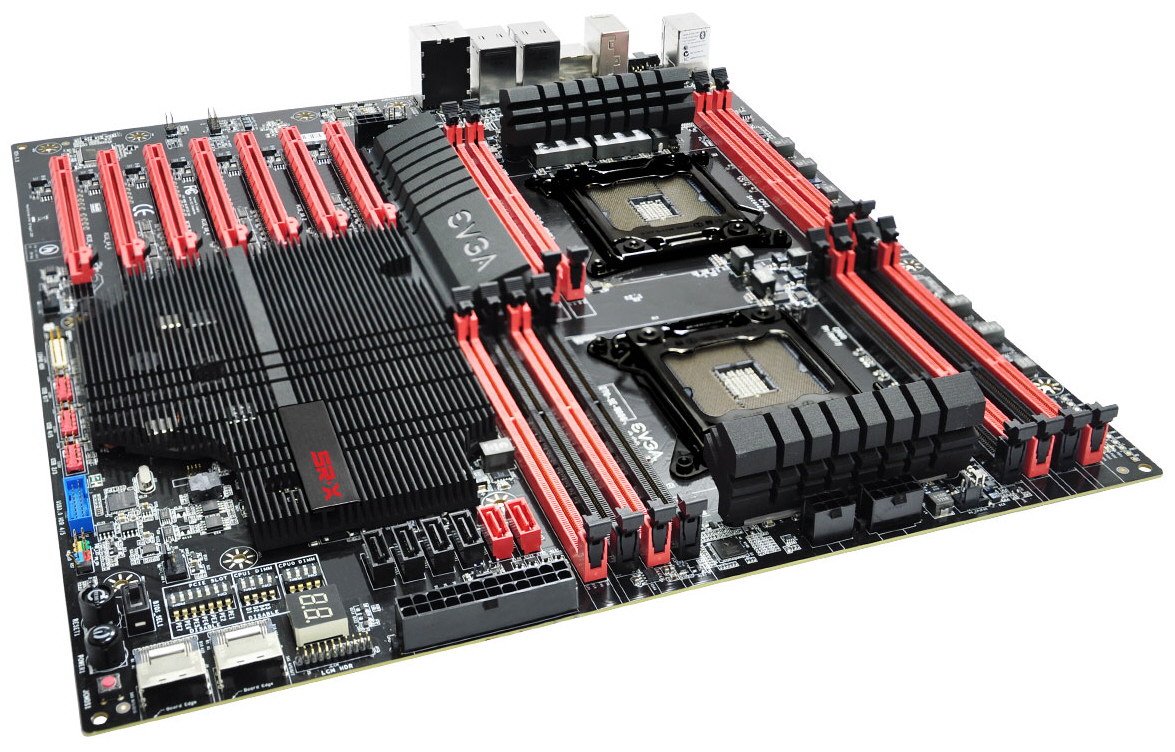
EVGA SR-X Dual-Socket LGA 2011 Motherboard Teased Some More

Wondering what's going on with EVGA's SR-X motherboard? Well the board still isn't ready for release but EVGA has made progress on it, as is confirmed by a new image provided by the US-based company. This photo showcases the SR-X in a near final stage, equipped with an updated cooling solution made up of four heatsinks (covering VRM areas and chipsets).

As previously reported, the SR-X comes with two LGA 2011 sockets (it supports Sandy Bridge-E CPUs for single-processor setups and Sandy Bridge-EP CPUs for dual-chip configurations), 12 DDR3 memory slots (up to 96 GB of RAM are supported), two (one 8-pin and one 6-pin) power connectors per CPU, six SATA and four SAS (Serial Attached SCSI) ports, seven PCI-Express 3.0 x16 slots (SLI and CrossFireX support is included), PCIe disable switches, voltage read points, a debug LED, dual Gigabit Ethernet, two eSATA ports, 7.1 channel audio, Bluetooth, EVBot support, and six USB 3.0 connectors (four on the back plate, two via a header).

EVGA is promising more details about the SR-X (a price tag and an availability date maybe) 'soon'.


Source: Twitpic

Tuesday, February 7, 2012

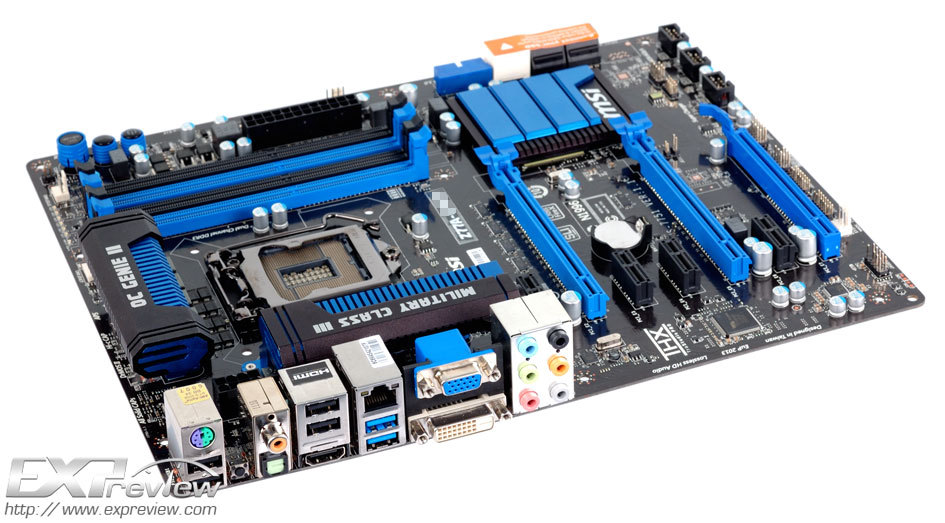
MSI Z77A-GD55 Motherboard Pictured

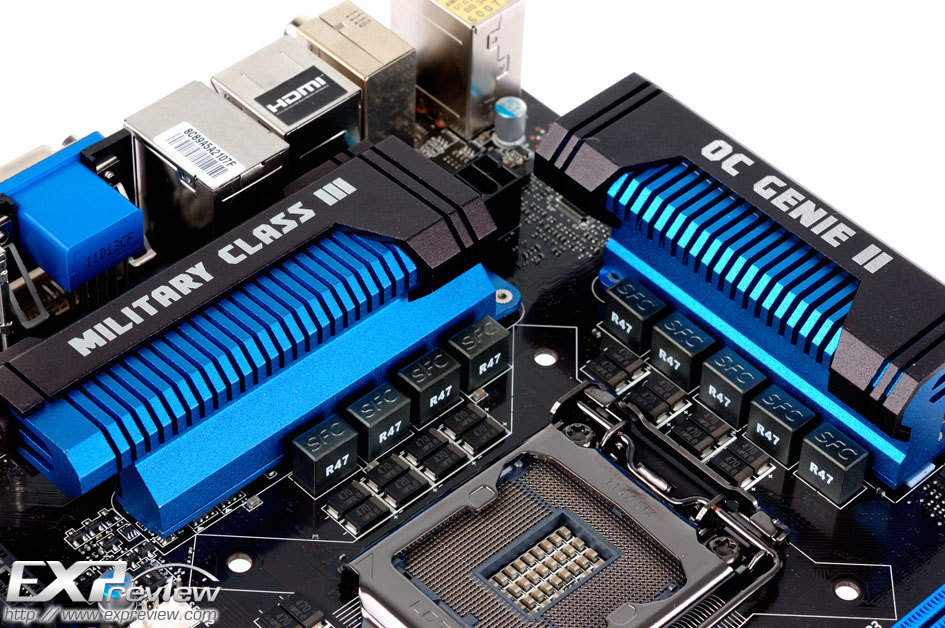
Here are the first pictures of MSI's Z77A-GD55 motherboard. The GD55 is a notch below the GD65 in terms of its feature-set, and will likely hold a cost-benefit sweetspot. The motherboard is designed to support today's "Sandy Bridge", and tomorrow's "Ivy Bridge" Core processors in the LGA1155 package, and is based on Intel's Z77 "Panther Point" chipset. The CPU is powered by a lighter 9-phase VRM compared to the 12-phase VRM on the GD65. It retains the expansion slot layout of its elder brother, consisting of two PCI-Express 3.0 x16 (x16/NC or x8/x8), four PCIe x1, and one PCIe 2.0 x4 (physical x16).

The Z77A-GD55 has two fewer SATA 6 Gb/s ports compared to the GD65, all its internal ports are wired to the PCH. That's two SATA 6 Gb/s and four SATA 3 Gb/s. There are no eSATA ports. Further, there are no third-party USB 3.0 controllers, either. All four of the USB 3.0 ports (two on the rear panel, two via front-panel header) are wired to the PCH. Display connectivity includes DVI, D-Sub, and HDMI. 8-channel HD audio with optical and coaxial SPDIF outputs, and gigabit Ethernet make for the rest of its connectivity.


Most of the overclocker-friendly features from the GD65 are retained, albeit stripped down. For example, the consolidated voltage measurement points are still there, but just as exposed solder points instead of sockets that can hold multimeter leads; same with OC Genie. MSI's UEFI BIOS with plenty of tuning features is still there, but unlike with the GD65, there's no redundant BIOS. While in the pictures about the complete model name is masked, reliable sources hinted at it being the Z77A-GD55.

Source: Expreview

Friday, February 3, 2012

Production-Grade MSI Z77A-GD65 Motherboard Pictured

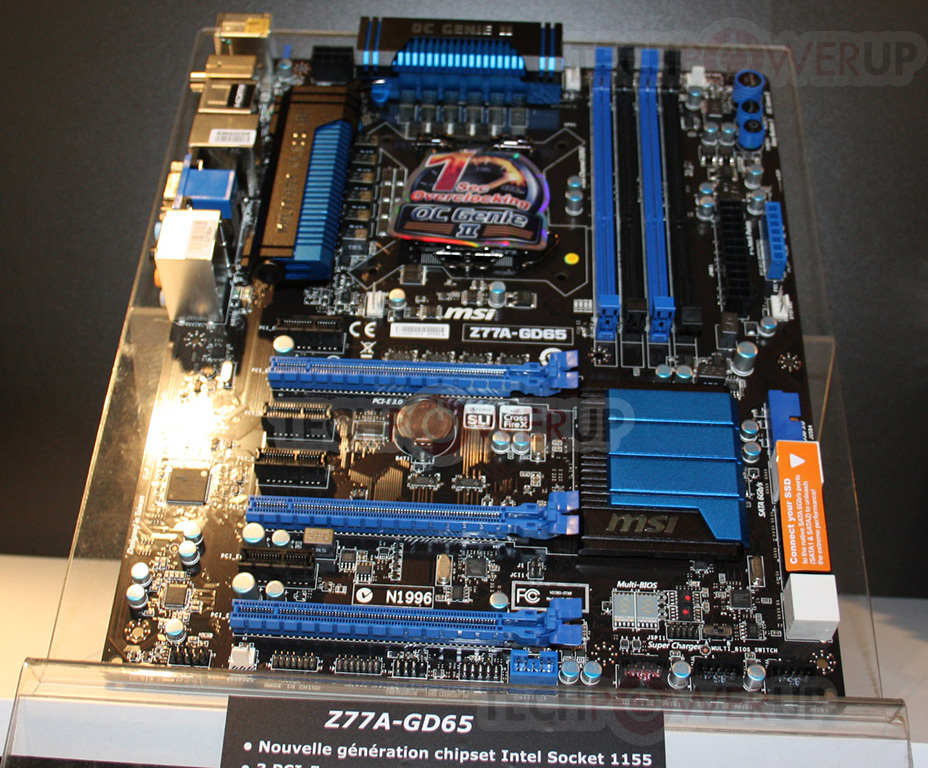
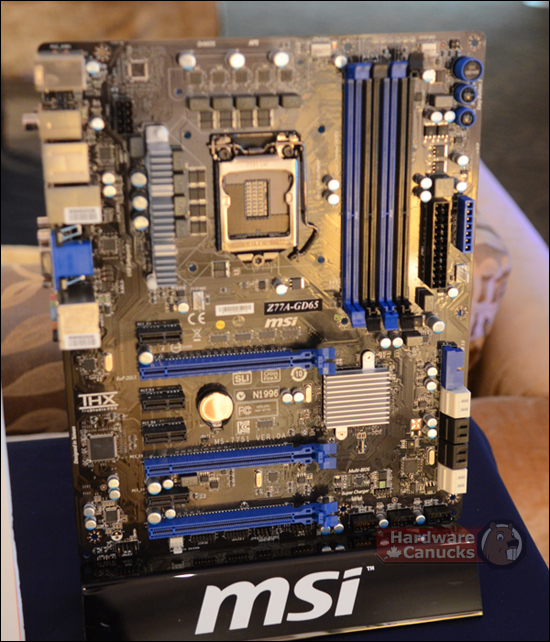
At CES, TechPowerUp got to check out MSI's Z77A-GD65 motherboard in its baby-suit, with just basic heatsinks, as the production ones were getting finalized. At the IT Partners show, we got to see the production model of this board, complete with its final VRM and PCH heatsink design.

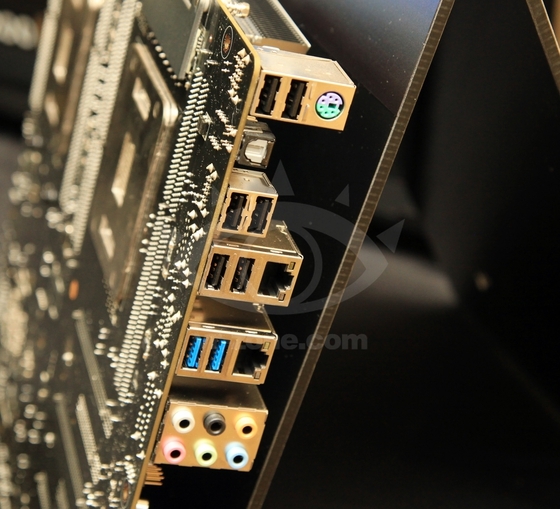
The Z77A-GD65 uses a 9-phase VRM to power the CPU. Expansion slots include two PCI-Express 3.0 x16 (x16/NC or x8/x8, depending on the second slot being populated), one PCI-Express 2.0 x16 (electrical x4, wired to the PCH), and four PCIe x1. Storage connectivity include four SATA 6 Gb/s (two from the PCH, two from a third-party controller), and four SATA 3 Gb/s ports. Display connectivity includes D-Sub, DVI, and HDMI. Other features include a number of USB 3.0, USB 2.0 ports, 8-channel HD audio, and features for overclockers such as consolidated voltage measurement points, redundant UEFI BIOS, and OC Genie. It is slated for April.


Source

Thursday, January 19, 2012

GIGABYTE Releases its First Entry-Level Motherboard with Dual-UEFI BIOS

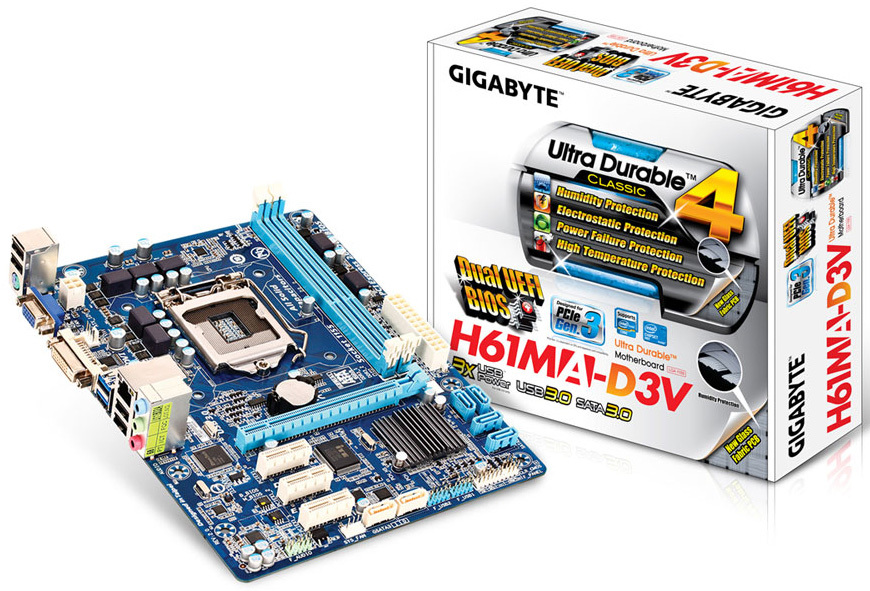
After trying to avoid UEFI BIOS by sticking to "HybridEFI" workarounds to its existing AwardBIOS code on most of its socket LGA1155 and AM3+ motherboards, GIGABYTE reluctantly transitioned to UEFI with its socket LGA2011 motherboards, on which it fused its innovative Dual-BIOS technology with UEFI to come up with Dual-UEFI technology. One can imagine this to be particularly tough to implement on lower-end models, since UEFI with graphical setup program requires higher-capacity EEPROM chips, and since Dual-UEFI would need two, it would stress component costs, but GIGABYTE did it anyway.

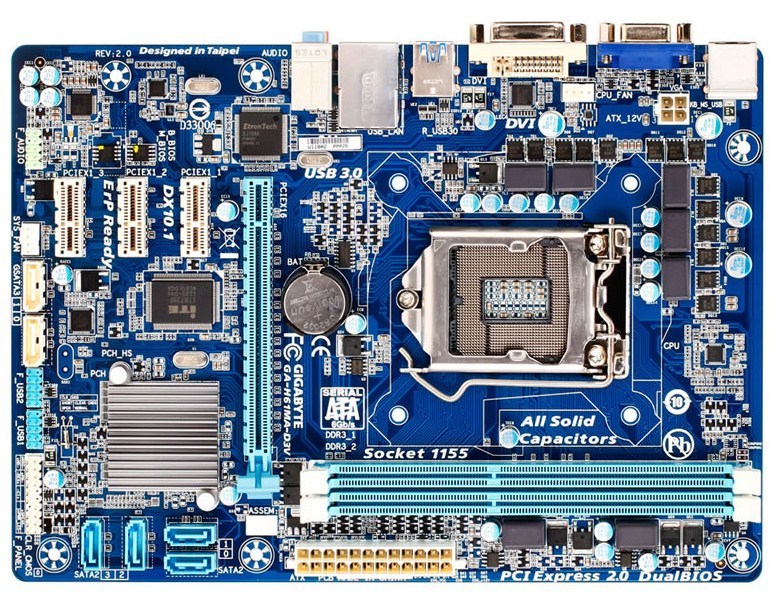
In Japan, the company released the latest revision of the GA-H61MA-D3V (rev. 2.0), an entry-level socket LGA1155 motherboard based on the Intel H61 chipset, which features Dual-UEFI. Apart from this, the board also features GIGABYTE's Ultra-Durable 4 Classic component loadout, which consists of a new fiberglass fabric weave PCB that's more resistant to humidity that causes short-circuits, high ESD-resistance ICs, anti-surge ICs located on critical circuits, low RDS (on) MOSFETs, and a 100% high-grade solid-state capacitor design.


The CPU is powered by a 5-phase VRM, it is wired to two DDR3 DIMM slots supporting up to 16 GB of dual-channel DDR3 memory. Expansion slots include one PCI-Express 3.0 x16, and three PCIe x1. The move to exclude legacy PCI is not only progressive, but could also save GIGABYTE the cost of placing a PCI-PCIe bridge chip. Storage connectivity includes two SATA 6 Gb/s ports from Marvell 88SE9172 (since H61 PCH lacks SATA 6 Gb/s), and four SATA 3 Gb/s ports from the PCH. Other connectivity includes 6-channel HD audio (driven by Realtek ALC887), two USB 3.0 ports (driven by EtronTech EJ168), gigabit Ethernet (driven by Realtek 8111E), and a number of USB 2.0 ports. Display connectivity includes DVI and D-Sub.

Source

Tuesday, January 17, 2012

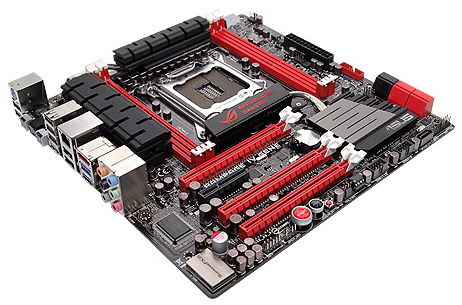
ASUS Launches ROG Rampage IV GENE X79 mATX Gaming Board

Rampage IV GENE continues the legacy of Republic of Gamers motherboards by delivering gamers with enhanced performance that places a premium on fidelity and speed. SupremeFX III EMI-shielded audio guarantees better in-game sound, Intel Ethernet LAN and ROG GameFirst technology boost online multiplayer performance, while ROG Extreme Engine Digi+ II digital voltage regulation promotes improved overclocking.

The board further uses Black Metallic capacitors and NexFET Power Block MOSFETs for added durability and heat resistance. Unlike budget micro ATX boards, it supports 2-way NVIDIA SLI and AMD CrossFireX.


SupremeFX III audio

Electromagnetic interference (EMI) remains a detriment to quality sound, causing distortion and loss unless properly mitigated. Rampage IV GENE uses a custom PCB "red line" layout which physically isolates SupremeFX III hardware from the rest of the motherboard to eliminate interference and generate clearer, more precise, and deeper audio. Better sound helps competitive gamers with improved positioning and spatial awareness, in addition to promoting greater immersion. SupremeFX III comes with its own steel shield, a 1500uF capacitor for stable audio power delivery, plus gold-plated audio jacks. The setup has been tested to 110 dB SNR, ensuring lossless performance. EAX Advanced HD 5.0, Creative Alchemy, and THX TruStudio PRO are all fully supported. Rampage IV GENE comes bundled with a Creative Sound Blaster X-Fi MB2 suite, providing the finest game audio of any micro ATX board, with realistic sound effect reproduction, lifelike music, and theater-grade movie sound.

Lag-resistant online gaming and multi-GPU support

Intel Ethernet reduces CPU utilization by as much as 35% when processing online activity compared to systems using standard LAN, which combats latency and boosts packet transmission. Better network performance presents an edge for gamers, with the overwhelming importance of global online multiplayer gaming requiring faster connections for a smooth and competitive experience. ROG-exclusive GameFirst contributes to achieving this goal, working as a connection supervisor to prioritize bandwidth availability and ensure games receive sufficient resources, even when downloading occurs in the background. To further accommodate gamers, Rampage IV GENE supports PCI Express 3.0 and 2-way SLI/CrossFireX for increased future proofing and flexibility.

Greater overclocking through improved endurance and stability

Rampage IV GENE ships with the exclusive ROG Extreme Engine Digi+ II design, consisting of digital voltage regulators for refined tuning and higher power efficiency. Gamers can adjust voltages in more precise increments, which aids in overclocking. Supporting this, Black Metallic capacitors and NexFET Power Block MOSFETs easily surpass the capabilities of generic parts. They resist heat better, last up to five times longer, and can take up to 20% higher temperatures than generic components, culminating in a highly durable and long lasting board that reduces the likelihood of instability even when running high intensity applications.

First X79 board officially certified by the USB-IF

In addition to its many advantages, the Rampage IV GENE has also secured the honor of being the first Intel X79-based motherboard formally authorized and certified USB 3.0-ready by the USB Implementers Forum. Certification speaks of the extensive testing and compatibility assurance ASUS puts into every board from early development to shipping. Always committed to advancing technology and giving consumers the best performance possible, ASUS has gone further and self-developed USB 3.0 Boost to accelerate data speeds beyond reference requirements. The multi-mode design of USB 3.0 Boost increases device connectivity for both the traditional BOT protocol and the newer UASP, and its inclusion on ROG boards offers gamers even better value than before.

Complete range of X79 gaming boards

The release of Rampage IV GENE follows the previous launch of Rampage IV Extreme and Rampage IV Formula Intel Socket LGA 2011/X79 Express Chipset-based models. The three maintain ROG leadership in the gaming and overclocking motherboard segments, providing consumers with superior performance and the finest quality in a vibrant PC gaming scene where technical excellence is critical.

Source

Tuesday, January 10, 2012

MSI Z77 Motherboards and Next-Gen GUS Pictured

MSI showed off its upcoming socket LGA1155 motherboards based on Intel's Z77 chipset, designed to accommodate next-generation "Ivy Bridge" Core processors out of the box. Like many other motherboard manufacturers with similar motherboards on display, MSI's Z77 motherboards lack the final designs of their typically fancy-looking heatsinks over the chipset and VRM, and make do with basic ones that get the job done, and more importantly, let visitors take a look at the components in use more closely. MSI displayed two motherboards, the mid-range Z77A-GD65, and premium Z77A-GD80.

The Z77A-GD80 is designed for gaming PCs with up to two graphics cards, with a strong CPU VRM. The CPU is powered by a 14-phase VRM, complete with SFC chokes, compact DrMOS, and server-grade capacitors. There are three long PCIe slots on the board, but it appears like only two of the three are wired to the CPU, the third one to the Z77 PCH. Those two slots are PCIe 3.0 capable. SATA ports include four 6 Gb/s capable ones. The USB 3.0 front-panel header is angled like the SATA ports. Other connectivity includes Intel Thunderbolt, USB 3.0, display connections that include DVI, D-Sub, and HDMI; 8-channel HD audio, GbE, and eSATA.


The Z77A-GD65 is the more affordable board. It uses a simple 9-phase VRM to power the CPU, but has the same expansion slot layout as the GD80, with two PCIe 3.0 x16 (x16/NC or x8/x8), one PCIe 2.0 x16 (x4, wired to PCH), and four PCIe 2.0 x1. It even has the same number and kind of SATA ports. Its connectivity might lack Thunderbolt.

MSI also showed of GUS (graphics upgrade system), an external graphics card enclosure. This box connects to a host PC/Mac using Thunderbolt (essentially PCIe 2.0 x4), and internally has a PCIe x16 slot and related power delivery circuitry. It draws power from an external source.

Source: HardwareCanucks

ASUS Dual-Socket LGA2011 Motherboard Pictured

At CES, ASUS showed off its latest workstation motherboard designed for 2P socket LGA2011 Sandy Bridge-EP eight-core processors, the Z9PE-D8-WS. By the looks of it, it might not be having the voltage-delivery muscle of EVGA's SR3, but it is filled to the brim with connectivity. Each socket is powered by a 14-phase Digi+ II VRM, there are numerous other power domains. The board draws power from a 24-pin ATX connector, two 8-pin EPS connectors, and a 4-pin Molex.

The sockets are each wired to four DDR3 DIMM slots, giving this board the ability to hold up to 256 GB of RAM. There are seven PCI-Express 3.0 x16 expansion slots, from which four (blue) are x16 capable, and three (black) x8 capable. There are as many as 10 SATA ports, of which six appear to be 6 Gb/s capable. In terms of connectivity, an ASpeed AST2300 provides basic display and management over IP functions; there are two gigabit Ethernet interfaces driven by Intel-made controllers, two USB 3.0 ports, 8-channel HD audio, and a number of USB 2.0 ports. ASUS demonstrated this board by running two 2P capable unknown processors, three latest NVIDIA Tesla GPU compute cards, and an ASUS-made graphics card. Unlike with EVGA SR3, which is technically a workstation motherboard designed for enthusiasts, the Z9PE-D8-WS is intentioned to be a workstation motherboard only.


Source: VR-Zone

Tuesday, January 3, 2012

MSI Launches the Big Bang-XPower II X79 Motherboard

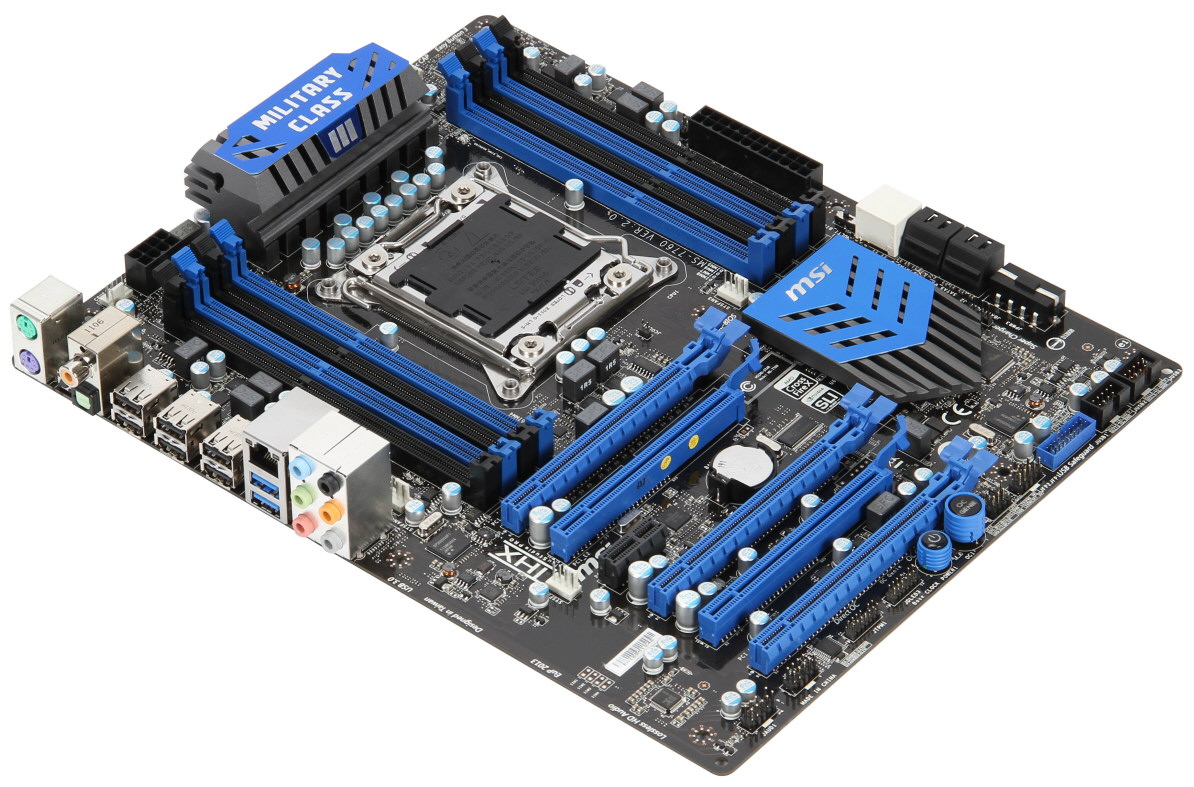
After a few months of teasing, MSI's newest Big Bang series motherboard, the XPower II, has now been officially introduced, and is marketed as the perfect solution for 'xtreme' overclockers and gamers. Powered by Intel's X79 chipset, the XPower II supports Sandy Bridge E processors and features a 22-phase PWM design with Hybrid Digital Power for an output of up to 770 W, Military Class III components (Hi-c CAP, SFC, Solid CAP, DrMOS II), dual 8-pin CPU power connectors, plus seven PCI-Express x16 (four are PCIe 3.0, the rest are 2.x) slots enabling 4-way SLI or Quad CrossFireX GPU setups.


MSI's flagship X79 board also has a SuperPipe-enhanced passive cooling system, eight DDR3-2400 memory slots supporting up to 128 GB of RAM, PCIe 'CeaseFire' switches, V-check points, a Direct OC button, six SATA 6.0 Gbps and four SATA 3.0 Gbps ports, dual Gigabit Ethernet, Realtek ALC892 7.1-channel audio (backed by Creative's Sound Blaster X-Fi MB2 solution), six USB 3.0 ports (four on the back panel, two via a header next to a PCIe power connector), a debug LED, Click BIOS II (UEFI), Multi-BIOS, one FireWire connector, and the Winki 3 instant-on OS.


Source

Wednesday, December 28, 2011

Gigabyte Recalling X79 UD3, UD5, G1.Assassin 2 Motherboards

Last week, a Taiwanese overclocker putting his OC workbench through an relatively laxed OC stress test saw its Gigabyte X79 UD3 motherboard go bust. Its CPU VRM couldn't cope with the stress, and blew a MOSFET. At the time, people responding to his video condoled him for his bad luck. It appears now that his wasn't a one-off case of "bad-egg". Gigabyte, in its latest press release on its Chinese website, noted the issue. Apparently it received several such complaints from overclockers where even moderate voltage-assisted CPU OC fried its VRM. The issue was found to be widespread, among three of its main socket LGA2011 products, the GA-X79-UD3, GA-X79-UD5, and G1.Assassin 2.

Apparently, the issue is caused by a cocktail of bad firmware to complement the board's PWM circuitry, and bad quality PWM components. As an immediate remedy, Gigabyte issued a BIOS update for the affected products. This BIOS, however, will cripple the board's overclocking abilities. The new BIOS will throttle CPU when subjected to extreme stress, to save the VRM. The BIOS remedy is only for those who opt to keep their boards, or don't subject the board to extreme tuning. The other remedy, is to return the board to Gigabyte, for a free replacement when the "right" boards are available. Gigabyte also announced a general recall of the GA-X79-UD3, GA-X79-UD5, and G1.Assassin 2, from the market. A video of the "unlucky" (not anymore) overclocker's day going bad, can be watched here.


Source: Gigabyte

Friday, December 16, 2011

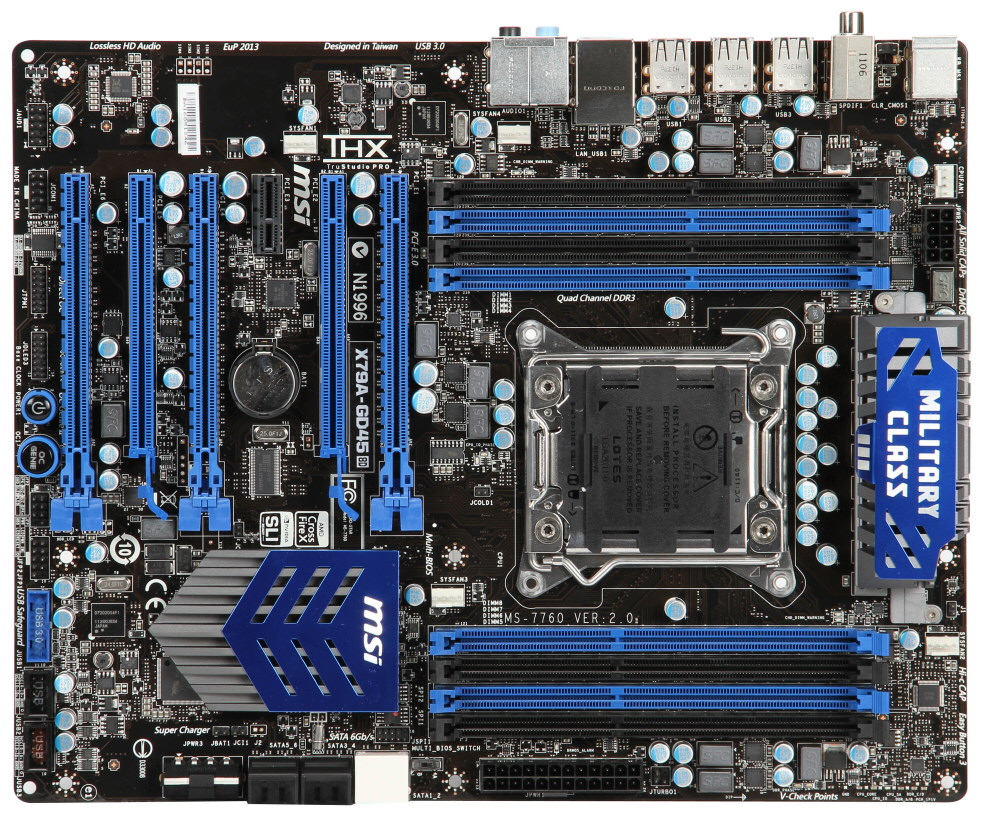
MSI Intros the X79A-GD45 (8D) LGA2011 Motherboard Supporting 128 GB of RAM

Taiwanese company MSI has today unveiled the eight DIMM version of its X79A-GD45 motherboard released last month. This new, module-enriched board is called X79A-GD45 (8D), it supports LGA2011 (Sandy Bridge-E) processors, and, according to MSI, can handle up to 128 GB of RAM (G.Skill will need to take notice).

The X79A-GD45 (8D) features Military Class III components (DrMOS II, Hi-C CAP, Solid CAP, Super Ferrite Choke), the mentioned eight (DDR3-2400) memory slots, two SATA 6.0 Gbps and four SATA 3.0 Gbps ports, plus three PCI-Express 3.0 x16 and two PCIe 2.0 x16 slots.

MSI's board also comes with one PCIe x1 slot, Gigabit Ethernet, four USB 3.0 ports (two on the back plate, two via a header), 7.1-channel audio, Click BIOS II (UEFI), and the OC Genie II overclocking function. The X79A-GD45 (8D) has yet to be priced but since its quad-DIMM sibling costs 195 Euro, we're thinking it will go over the 200 Euro mark.


Source

Thursday, December 8, 2011

ASUS Rampage IV Gene Detailed

Nearly a month after going all guns blazing into the Sandy Bridge-E LGA2011 market with the Rampage IV Extreme, ASUS is close to launching its premium Republic of Gamers motherboard in the micro-ATX form-factor, the ROG Rampage IV Gene. News of this board surfaced in mid-November along with details of Rampage IV Formula, but with close to no details, not even a picture to go on. Sweclockers scored an internal presentation by ASUS that details this new kid on the block.

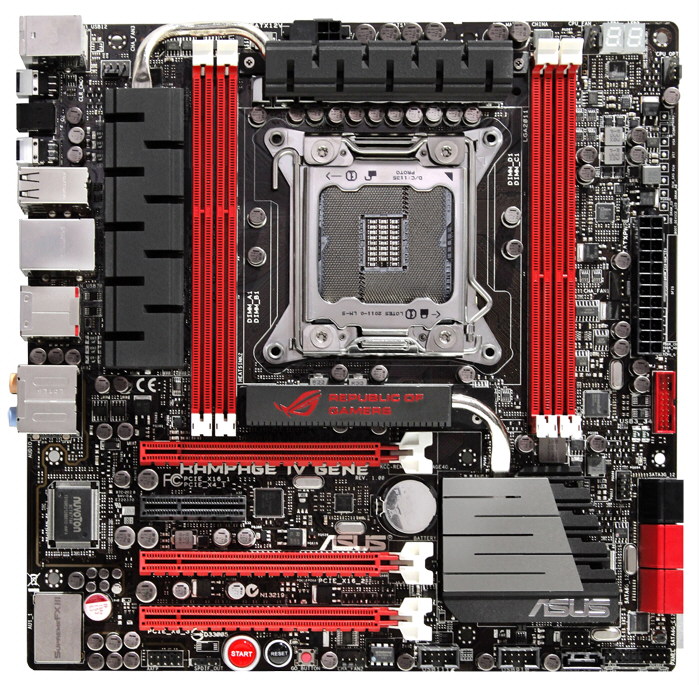
The Rampage IV Gene could very well be the first micro-ATX motherboard that's designed to be 3-way SLI/CrossFire capable, with PCIe slots wired to the system's main root complex. Its top-half layout is similar to that of every other X79 motherboard, with the LGA2011 processor socket sitting between two sets of DDR3 DIMM slots. In this board, each set has just two slots, each with its own 64-bit wide memory path (channel) to the processor IMC. The processor is powered by an 8-phase Digi+ II VRM. The VRM makes use of compact DrMOS chips, that are cooled by two sets of heatsinks connected by a heat pipe.


Expansion slots include three PCI-Express 3.0 x16, which are configured as x16/x16/x8, and an open-ended PCI-Express 2.0 x4, wired to the X79 PCH. Storage connectivity includes four SATA 6 Gb/s (red, from which two are wired to the X79 PCH, two to an ASMedia-made third-party controller); and three SATA 3 Gb/s ports (black, all wired to the PCH). The fourth SATA 3 Gb/s port from the PCH is assigned as eSATA. General connectivity includes SupremeFX III 8-channel audio backed by X-Fi MB software, one gigabit Ethernet connection driven by an Intel-made controller, four USB 3.0 ports (from which two are via header), USB 2.0, and PS/2 combo. There are several ASUS ROG-exclusive features, including ROG Connect, ROG GameFirst, USB BIOS Flashback, ASUS UEFI BIOS with ROG-exclusive features. We still don't have a clear release date.

Source: SweClockers

Tuesday, November 15, 2011

ASUS Launches the Most Complete and Innovative X79 Motherboard Lineup

ASUS, maker of the world’s best-selling and most innovative motherboards, is excited to release a wide range of new X79 motherboards. All feature the new Intel X79 Express Chipset, with support for 2nd generation Core i7 processors in the new LGA 2011 Socket. The complete lineup includes P9X79 Series motherboards with total performance tuning and control, the enthusiast-centric ROG Rampage IV Extreme, the ultra-reliable TUF SABERTOOTH X79, and the professional P9X79 WorkStation Series supporting NVIDIA 4-way SLI and AMD CrossFireX.

All motherboards feature ASUS Dual Intelligent Processor 3 technology with the latest ASUS DIGI+ Power Control design providing three digital voltage controllers onboard, one for the CPU and two for DRAM. ASUS’ class-leading Digital Power designs result in better performance, greater stability, and enhanced overclocking for all users. All of the new motherboards ship with multi-GPU support, PCI Express 3.0 capabilities*, exclusive ASUS UEFI and up to 64GB of quad-channel DDR3 support via 8-DIMM slots.


P9X79 Series: The ideal choice for unmatched features and user-friendly innovation
ASUS has developed the best power, system, and BIOS tuning options available for users to ensure an optimized computing experience on the new P9X79 Deluxe, P9X79 Pro, and P9X79 motherboards. Each feature ASUS’ new DIGI+ Power Control and DIGI+ Memory voltage options that allow users to reach higher processor and DRAM overclocks with the upmost stability and reliability.

An 8-DIMM quad-channel design supports up to 64GB of DDR3 memory that takes full advantage of 64-bit applications. Additional memory capacity assists with intensive data, image, and video processing applications while users can also set up large RAM disks to greatly accelerate system performance. ASUS SSD Caching is extremely user-friendly with one-click speedup functionality that combines solid state drive speeds with mechanical hard drive capacities, providing up to three times faster storage performance.

The ASUS UEFI BIOS has won media and user acclaim for its intuitive and easy GUI interaction. The latest version has been upgraded with the industry first F12 BIOS snapshot hotkey, the F3 system info shortcut, and DRAM SPD (Serial Presence Detect), which offers advanced support for memory troubleshooting. USB BIOS Flashback enables true plug and play UEFI flashing with any USB storage device. It works even without powering up the PC, using only standby power without a CPU, Video card or memory installed. Optional BT GO 3.0! consists of an onboard Bluetooth v3.0 +HS module that offers wireless 802.11n support, adding instant access point detection and setup for Wi-Fi everywhere.

The exclusive ASUS BT suite includes several special functions, allowing users to easily sync and transfer files between PC and mobile devices, and even use smartphones to overclock or monitor their PC. ASUS USB 3.0 Boost adds new UASP support to accelerate USB 3.0 performance by almost three times over standard protocols with supported devices.

ROG Rampage IV Extreme: The best choice for gamers and enthusiasts
The Rampage IV Extreme supports 4-way NVIDIA SLI and AMD CrossFireX and is designed to empower overclockers to reach new records while also offering the absolute best gaming performance and stability. It comes loaded with overclocking features well-suited to competitive benchmarking. Exclusive ROG X-Socket means LGA 1366 based CPU coolers and LN2 containers can be used as-is with the new board. OC Key is an ROG-designed device that connects to the DVI port of any graphics card to display performance and overclocking info on the screen independent of system resources. Users can make changes with no additional software, and without slowing their PC down.

For enhanced and modified cooling, ROG has developed Subzero Sense, which detects cooling system temperatures as low as -193゚C. ROG Extreme Engine Digi+ II and specially sourced high-grade capacitors ensure long lasting and high-endurance power delivery demanded by gamers and competitive overclockers. The Rampage IV Extreme comes bundled with the hit game Battlefield 3 from EA and DICE, which uses the Frostbite 2 engine to showcase the latest in DirectX 11 technology and graphics effects.

TUF SABERTOOTH X79: The reliability choice for rugged engineering and long-life
The new TUF SABERTOOTH X79 ships with an intelligent thermal design, military grade-tested TUF components, and exclusive cooling features for enhanced system stability under the harshest conditions. TUF Thermal Armor with dual fans expands cooling and precise airflow for more effective heat dissipation, improving system reliability and performance. TUF Thermal Radar monitors real-time temps via 12 sensors in strategic locations on the board, automatically adjusting fan speeds to maintain extended stability and prevent overheating. Military-grade TUF components include capacitors, chokes, and MOSFETs. Their heat and stress tolerance allows ASUS to offer an exclusive 5-year warranty on the SABERTOOTH X79. Additionally, the new model includes the new DIGI+ Power Control design and UEFI, giving it the same precision, performance, and user friendly options offered by the P9X79 Series.

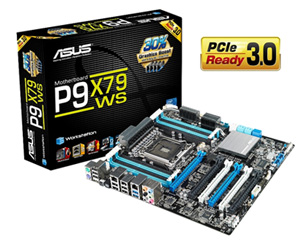
P9X79 WS: The ideal professional choice for multi-GPU expandability
Enhanced features and absolute stability is required from professional users and the P9X79 WS delivers, beginning with NVIDIA 4-way SLI and AMD CrossFireX and dual hardware-accelerated Intel LAN ports, which reduces CPU utilization for netcode processing by up to 71%. The P9X79 Work Station supports both Intel Core i7 processors and the upcoming workstation-specific Xeon family, and maintains compatibility with multiple memory, operating system, and RAID card selections. ASUS SSD Caching and USB BIOS Flashback are included along with ASUS’ DIGI+ Power Control design and award winning UEFI.

Source

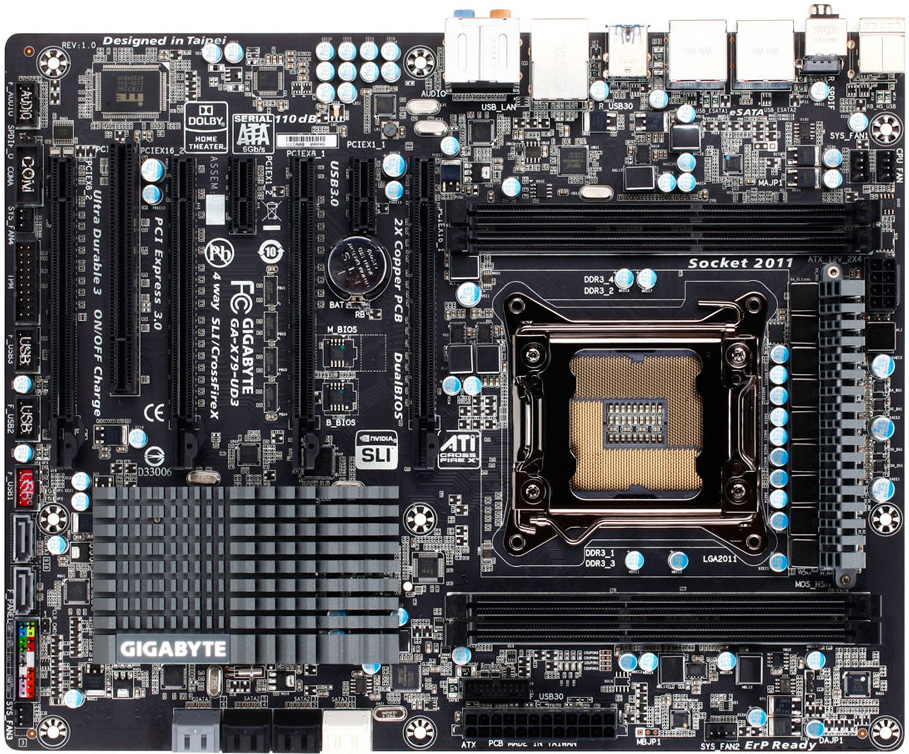
GIGABYTE Launches X79 Series Motherboards

GIGABYTE TECHNOLGY Co. Ltd., a leading manufacturer of motherboards and graphics cards, today announced the launch of their latest X79 series enthusiast motherboard range. Supporting the latest 2nd Generation Intel Core i7 processor family for high-end desktops, these new X79 Express Chipset motherboards unite unrivalled desktop PC performance with a new level of hardware flexibility and control. GIGABYTE 3D Power and its all new 3-way Digital Power Engine offers ultimate control of your PC's power delivery, while GIGABYTE 3D BIOS provides a wholly more intuitive and graphical UEFI BIOS environment.

"This new GIGABYTE X79 series range of boards are all about giving enthusiasts and professionals unprecedented control over their PC's hardware," commented Tim Handley, Deputy Director of Motherboard Marketing at GIGABYTE. "GIGABYTE 3D Power and 3D BIOS give hardcore gamers, extreme overclockers and cutting-edge content creators absolute mastery over every aspect of their PC."


GIGABYTE 3D Power
GIGABYTE X79 series motherboards take advantage of the new and exclusive GIGABYTE 3D Power, based on a 3-way Digital Power Engine for both the PWM and memory that delivers unprecedented power delivery control. Utilizing a brand new Digital PWM controller,GIGABYTE's 3D Power features three digital memory controllers for not only the memory, but VTT and VSA, for real-time adjustment and control. The GIGABYTE 3D Power application provides a range of controls via a graphical user interface, allowing adjustment of load line calibration, over voltage protection control and real-time adjustment of CPU, VTT, IMC and four-channel memory frequencies.

GIGABYTE 3D BIOS with Dual-UEFI
Based on our new UEFI DualBIOS technology, GIGABYTE 3D BIOS re-imagines the traditional BIOS environment to make it more accessible for novice users than ever before. GIGABYTE 3D BIOS provides a full featured advanced mode for veteran BIOS users, alongside a graphical 3D Mode which offers a far more intuitive BIOS experience that makes it easier to understand how BIOS settings affect their PC's hardware performance.

Intel X79 Platform Highlights
All GIGABYTE X79 series motherboards are designed to get the absolute best performance from the latest 2nd generation Intel Core i7 processors, bringing a number of new enthusiast-class features to Intel's latest extreme platform. Featuring the new LGA 2011 socket and based on the latest updated micro-architecture, these new processors feature up to six cores with up to 15MB L3 cache and four-channel DDR3 memory. With an unprecedented 40 PCI Express lanes, enthusiast gamers can also enjoy the absolute maximum GPU performance in Multi-GPU SLI and CrossFireX configurations.


GIGABYTE G1.Assassin 2
Designed as the base for the ultimate in gaming PC builds, the GIGABYTE G1.Assassin 2 motherboard combines the unrivalled performance of this new X79 platform with our award-winning G1.Killer design philosophy: onboard discrete-class audio is offered courtesy of the Creative Digital Audio processor (20K2) which offers X-Fi Xtreme Fideility and EAX Advanced HD Audio 5.0 technologies, while the Killer E2100 Game Networking Platform offers advanced network optimization and management for the very best online gaming experience. 3-way SLI and CrossFireX capability means users can really push the boundaries of 3D gaming to new heights.

GIGABYTE X79-UD7
The GIGABYTE X79-UD7 motherboard is designed to provide CPU performance worthy of champions, with specific built-in technologies for extreme overclocking configurations. The X79-UD7 features an all digital PWM, four full length PCIe slots for 4-way GPU configurations plus a range of features that mean overclockers will never tire of tweaking the latest 2nd generation Intel Core i7 processors. With GIGABYTE’s exclusive OC-VRM, you'll find POScaps that ensure easy insulation, while OC-Touch lets users tweak in real-time using onboard buttons to change multiplier frequencies. OC-DualBIOS is complimented with a BIOS Switcher button that offers fast back-panel access to two distinct BIOS configurations. A Clear CMOS button is also included along with an OC button for instant OC profile loading. OC-PEG offers additional discrete graphics array power via the SATA rail with two SATA ports, guaranteeing all the power needed for extreme 4-way SLI and CrossfireX configurations.

GIGABYTE X79-UD5
The GIGABYTE X79-UD5 motherboard provides the ultimate media processing workstation. Design and Engineering professionals that employ the latest CAD and multimedia creation software will be impressed with eight DDR3 memory slots combined with GIGABYTE's unique 3D Power design to offer the ultimate platform for memory and CPU intensive workloads. We've also included back panel access overclocking via a simple OC button so that you can get an instant boost in performance when needed.

Exclusive GIGABYTE Bluetooth 4.0 / Wi-Fi Expansion Card
GIGABYTE X79 series motherboards will also include an exclusive PCIe expansion card that offers support for the latest Bluetooth 4.0 and IEEE 802.11 b/g/n Wi-Fi connectivity. The new Bluetooth 4.0 standard includes Smart Ready technology that is debuting on mobile devices including the new Apple iPhone 4S. This means that transferring important content from your smart phone or tablet is easier and faster than ever.

For more information, visit the product pages of:
Or visit the microsite.

Source

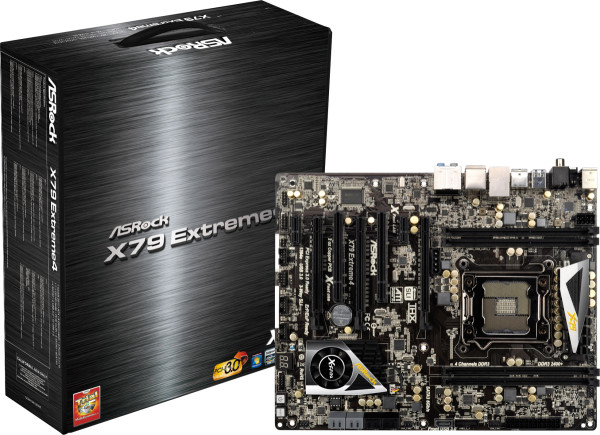
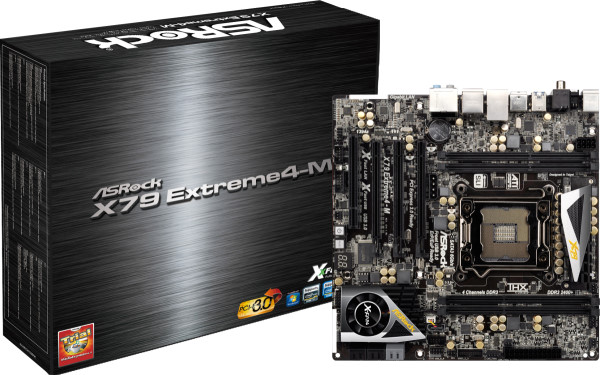
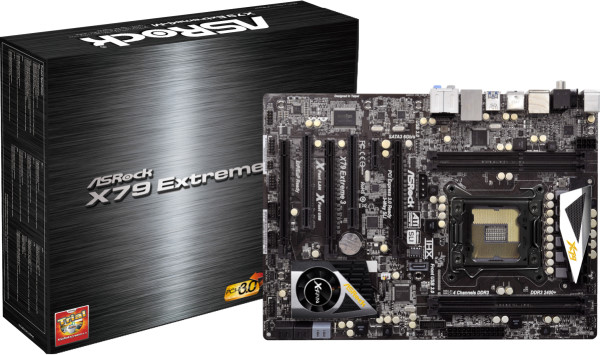
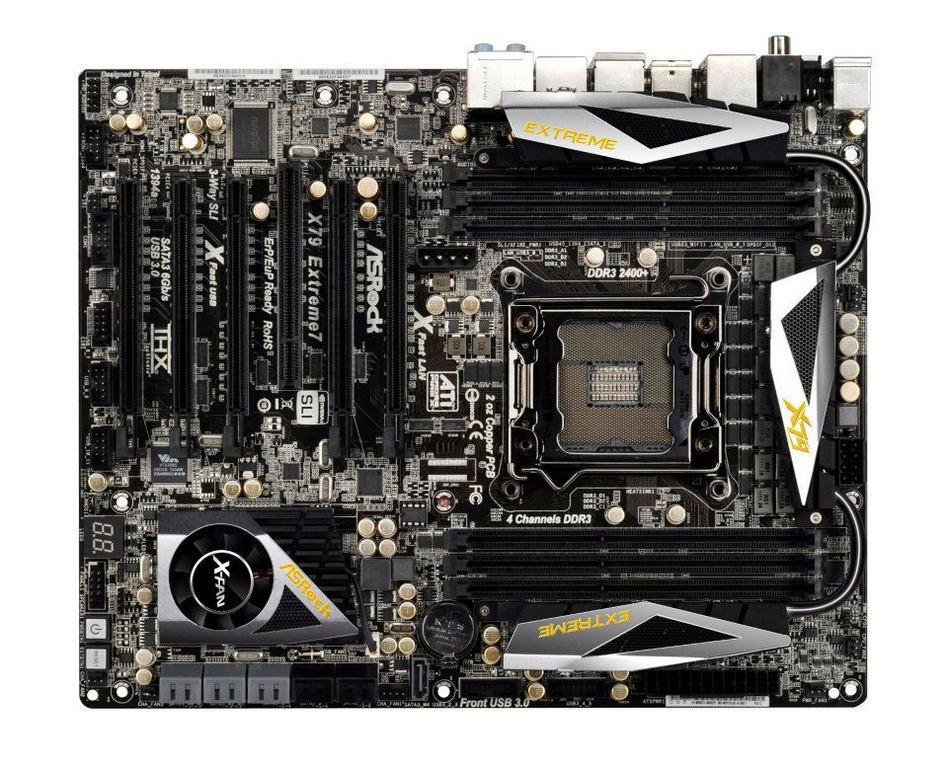
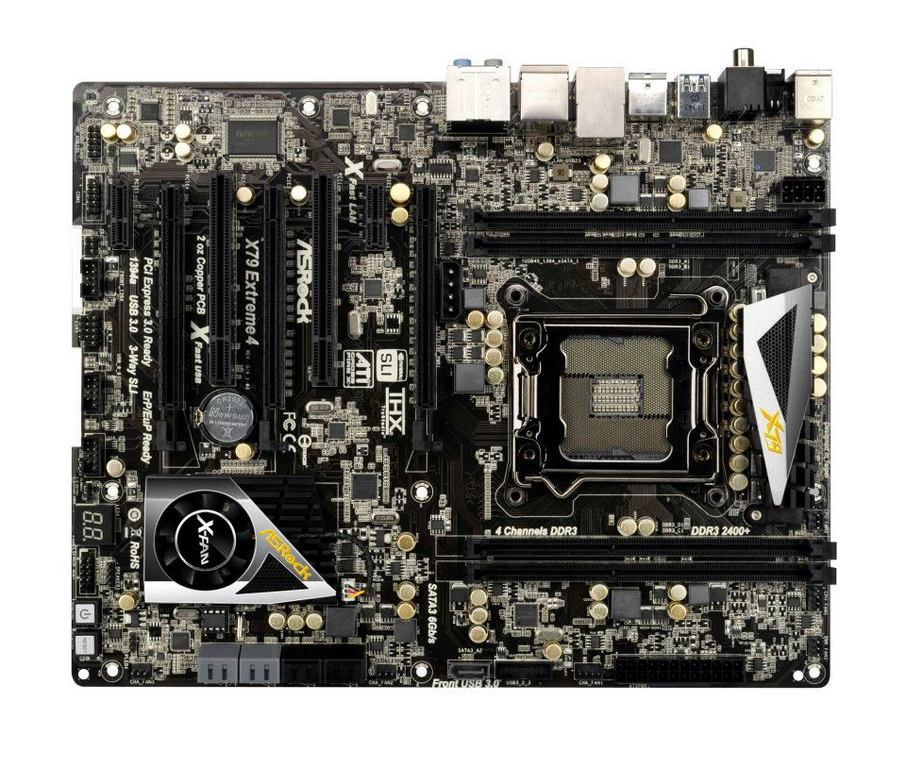
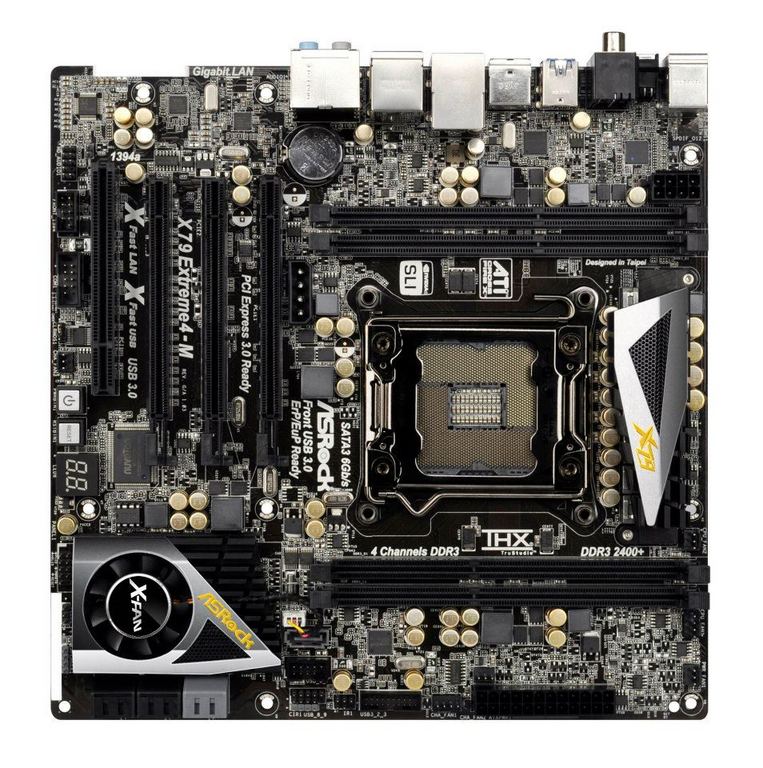
ASRock Unveils Superb X79 Overclock ‘KING' Motherboard Series

Motherboard platforms change frequently, especially when a new chipset is unleashed. The big change coming from Intel recently is the high-end X79 chipset, taking over from the crusty old X58 chipset. The new socket boasting a scarcely credible 2011 pins to allow the new Sandy Bridge-E processor has more memory channels. The newly released X79 platform is known for the astonishing OC capability. Designed for serious overclockers, ASRock is excited to introduce several high-performance motherboards based on Intel X79 chipset.

"The motherboard is the basis of your rig, and will dictate how well the rest of your PC's components perform." Commenting on the new release, James Lee, V.P of ASRock Sales and Marketing, is with confidence. "ASRock X79 Overclock KING Motherboard Series offer the Digi Power (the most stable CPU voltage), Premium Gold Caps (top-tier capacitors), X-FAN (the smart cooling design) and Game Blaster (a Sound & LAN 2-in-1 card exclusively offered from ASRock), everything essential for overclocking. Our exciting X79 mobos could boost the performance of any kind of PC!" He stated.


Overclocking Giant: X79 Extreme9
At the top of the ASRock's X79 range is the X79 Extreme9. ASRock X79 Extreme9 motherboard is the KING of the overclocking beasts. Overclocking is a safe and reliable method to squeeze more power out of the PC! Good power regulation is important for longevity and overclockability. There's an array of onboard overclocking designs that enthusiast could definitely appreciate. All series of ASRock X79 Motherboards support Digi Power. By adopting digital Pulse-width modulation (PWM), ASRock X79 mobos can provide CPU Vcore voltage more efficiently and smoothly. Another optimized solution for CPU Power is the advanced 16 + 2 power phase, offering sturdy components and unmatched overclocking capability. Top-class quality guaranteed Premium Gold Caps are 100% Japan-made solid capacitors. These caps are sleek, high gloss caps with a premium gold coating representing long life and stable performance.

Get The Maximum Memory Performance
ASRock X79 Extreme9 flagship board delivers extra memory bandwidth, coming with 8 DIMM slots for Quad-Channel memory, supporting up to DDR3 2133+(OC) MHz for all 8 DIMMs at the same time! All ASRock X79 mobos meet the latest Intel XMP 1.3 configuration. XMP 1.3 profile offers more precise DRAM timing settings and allows users to get the maximum memory performance from your system.

XFast RAM: Fully Optimize Memory Usage
Special highlight here is the newest XFast RAM technology. ASRock XFast RAM is integrated into ASRock Extreme Tuning Utility (AXTU). It fully utilizes the memory space that cannot be used under Windows 32-bit OS. XFast RAM also shortens the loading time of previously visited websites, making web surfing faster than ever. And it also boosts the speed when executing software with large file (i.e. Photoshop) up to 5 times faster. Another advantage of ASRock XFast RAM is that it reduces the frequency of accessing your SSDs or HDDs in order to extend their lifespan.

ASRock Game Blaster : Unleash Your Maximum Gaming Power
Not only focusing on overclocking characteristics, ASRock also pay attention on gaming demands. The top-end X79 Extreme9 mainboard comes with an exciting Gaming Blaster (exclusive to ASRock) that is able to deliver the breathtaking authenticity in sound and LAN.

ASRock Game Blaster is packed with the new earth-shattering Creative Sound Core3D quad-core sound and voice processor. It is designed to deliver sound and voice with unbeatable quality and accurate positional audio. It boosts gaming performance and allows users to morph their voice into miscellaneous characters which is amusingly funny. In addition to the independent audio processor, the ASRock Game Blaster also bundles with one PCIE Gigabit LAN. The integrated Broadcom BCM57781 controller is truly a single-chip solution for a Gigabit-Ethernet, providing extremely low power consumption designs.

Combined the power of Creative Sound Core3D audio technology and Broadcom LAN, ASRock Game Blaster can give extreme value for serious gamers!

Broadcom Dual LAN with Teaming Function
There's one Gigabit LAN port from Game Blaster, one from onboard rear I/O. Users are allowed to enjoy the Broadcom Dual LAN configuration with teaming function on ASRock X79 Extreme9 mainboard.

HyperDuo Plus Technology: Gain 6X Faster Performance!
X79 Extreme9 is dedicated to deliver fantastic performance. The onboard Marvell SE9220 controller supports Hardware RAID, providing high levels of storage reliability. While the SSD and HDD are connected, the board supports HyperDuo Plus™ technology which can make the SSD become the cache of the HDD to enable SSD-like performance. ASRock HyperDuo Plus technology saves more time on data transmission and provides up to 6 times faster performance than a HDD-only system.

Next Gen PCIe 3.0 Support
Other aspects of interest involving X79 and Sandy-Bridge-E include PCI Express going on-die and upgrading to 3.0. By adopting PCI-E 3.0 quick switch IC onboard, the ASRock X79 Extreme9 is hardware ready to support the Next-Gen PCI-E 3.0!*

*PCI-E 3.0 requires both a supporting CPU and motherboard at the same time. Please check Intel website for information on future CPU updates and releases.

ASRock X-FAN: The Smart Cooling Design
Greater air flow, faster heat dissipation! ASRock X-FAN could be found on ASRock X79 mainboards. It will be automatically activated only when the system rises to a certain temperature under heavy-loading. ASRock X-FAN allows the motherboard to breathe smoothly. Normally, it will remain deactivated to give users the quietest computing experience.

ASRock X79 Overclock ‘KING' Mobo Line-up
ASRock provides the most overclockable mainboards, allowing overclockers to get a fair chunk of extra performance from them for very little extra effort or danger. ASRock has five X79 boards in its mobo line-up from the all-shining, all-dancing flagship X79 Extreme9 to the quietly confident X79 Extreme3.

ASRock X79 Extreme9 keeps up the tradition of good build quality, using first-rate components and stable performance that has come to represent ASRock boards in recent times and ensuring you will get rock-solid stability out of the box.


Combining the world's smartest overclocking engineering with jaw-dropping design, the ASRock X79 Overclock KING Motherboard Series let you master any overclocking competition the easy way - and be legend.


For more information, visit the ASRock X79 microsite.

Source