Apple seems to have a revolving door for legal actions as of late. Today
the Chicago Tribune is reporting Apple has asked a federal court in
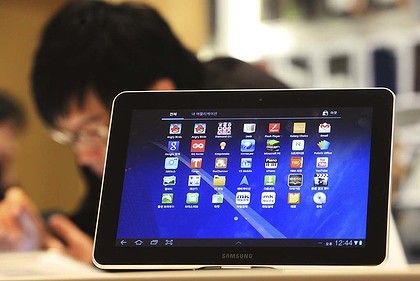
California to block Samsung from selling its new Galaxy Nexus
smartphones, which use Google's newest version of Android, called Ice
Cream Sandwich, alleging four patent violations including new features
such as a voice-command search function.
Galaxy Nexus, the official debut of which was delayed by Samsung in
October to pay respect to Apple's co-founder Steve Jobs, is the first
phone running on the newest Android version before the platform is
widely adopted by hardware manufacturers such as HTC Corp and Motorola
Mobility. HTC and Motorola are also in separate patent disputes with
Apple. In a lawsuit filed last week in San Jose, Apple said the Galaxy
Nexus infringes on patents underlying features customers expect from
Apple products. Those include the ability to unlock phones by sliding an
image and to search for information by voice.
"Google cannot deny its undivided responsibility for any infringement
findings. A preliminary injunction would not prohibit the sale of a
Galaxy nexus just because it's called Galaxy Nexus or looks like one:
it's all about which patents it infringes on," said independent patent
expert Florian Meuller. "I am absolutely certain that...for the
preliminary injunction motion the Galaxy Nexus was singled out because
it's so new, and important."
Samsung said in a statement on Monday that it is aware of the filing by
Apple in the California court. "We continue to assert our intellectual
property rights and defend against Apple's claims to ensure our
continued innovation and growth in the mobile communications business,"
Samsung said in a statement.
With the new lawsuit, Apple is opening up another legal assault on the
South Korea-based company after taking Samsung to the same court in
April of last year. In the earlier case, Apple alleged that Samsung
illegally copied iPhone and iPad design features and the look of its
screen icons. That case is still going on, although in December Apple
lost a bid for a preliminary bar against Samsung for selling Galaxy
phones and tablets.
Apple acknowledged the setback in the new action and said now it is
suing over new products and different patents. In addition to the
California cases, Apple and Samsung are waging more than 20 legal fights
in at least 10 countries in their war for global leadership of
smartphone and tablet markets.
Source: Chicago Tribune
Showing posts with label Apple. Show all posts
Tuesday, February 14, 2012
Apple On Track for Trillion Dollar Valuation
Today Apple announced its market value to be $500 billion dollars after a
massive stock surge Monday. The tech giant’s valuation is now nearly
halfway to the 10-figure mark, with speculation Apple will launch iTV
later this year driving shares to new record highs. Yet, Apple still has
a way to go to become the most valuable company of all time. If Apple
shares continue to hit new record levels, its market cap will reach $500
billion when the price reaches $537.
Still, shares will need to rise another $100 above that level to put Apple in contention for the most expensive company ever. According to Standard and Poor’s, ExxonMobil was the most recent company to see a valuation north of $500 billion, back in 2007 when oil prices were at record highs. While Microsoft may not excite investors like it did in Y2K, the software behemoth still holds the record for the most expensive valuation. Its market cap closed out 1999 at just over $600 billion according to Standard and Poor’s, before peaking north of $650 billion during the tech bubble in 2000. The high analyst price target on the street for Apple right now is $700. At that price, its market cap will handily surpass Microsoft’s Y2K record.
Time will tell if Apple will reach the trillion dollar mark.
Source: CNBC
Still, shares will need to rise another $100 above that level to put Apple in contention for the most expensive company ever. According to Standard and Poor’s, ExxonMobil was the most recent company to see a valuation north of $500 billion, back in 2007 when oil prices were at record highs. While Microsoft may not excite investors like it did in Y2K, the software behemoth still holds the record for the most expensive valuation. Its market cap closed out 1999 at just over $600 billion according to Standard and Poor’s, before peaking north of $650 billion during the tech bubble in 2000. The high analyst price target on the street for Apple right now is $700. At that price, its market cap will handily surpass Microsoft’s Y2K record.
Time will tell if Apple will reach the trillion dollar mark.
Source: CNBC
Apple Announces Independent Factory Inspections
According to the New York Times Apple is going on the offensive to save
face in a string of workers rights issues in Chinese factories.
Apple said Monday that an independent labor rights organization had begun auditing working conditions at Chinese factories where Apple products are made. Apple said the group, the Fair Labor Association, started its first inspections Monday at a factory run by Foxconn in Shenzhen, China, known as Foxconn City. Apple said the inspection had been led by a team of labor-rights experts including Auret van Heerden, president of the association. Apple said the group, at Apple’s request, would also conduct audits of other factories where Apple products are assembled, including Foxconn’s factory in Chengdu and others run by Quanta and Pegatron.
Working conditions in Foxconn factories, including safety lapses that led to worker deaths, were the subject of an investigative article last month by The New York Times.
Scrutiny of its suppliers’ factories has increased as Apple has become more successful. In January, the company said it would join the Fair Labor Association, becoming the first technology company to do so, to help improve conditions in its suppliers’ factories. The news was released along with a report that Apple releases roughly every year based on its own inspections of factories. That report documented numerous labor violations, including factories where employees worked longer than 60-hour weekly limits and were not paid proper overtime.
Apple said Monday that its suppliers had pledged to give the Fair Labor Association unrestricted access to their operations during its inspections. Apple said the group would “interview thousands of employees about working and living conditions including health and safety, compensation, working hours and communication with management.” It will also inspect manufacturing areas, worker dormitories and other facilities, the company said.
“We believe that workers everywhere have the right to a safe and fair work environment, which is why we’ve asked the F.L.A. to independently assess the performance of our largest suppliers,” Tim Cook, Apple’s chief executive, said in a statement. “The inspections now under way are unprecedented in the electronics industry, both in scale and scope, and we appreciate the F.L.A. agreeing to take the unusual step of identifying the factories in their reports.”
When completed, Apple said, the association’s inspections will cover factories where more than 90 percent of Apple’s products are assembled.
Source: New York Times
Apple said Monday that an independent labor rights organization had begun auditing working conditions at Chinese factories where Apple products are made. Apple said the group, the Fair Labor Association, started its first inspections Monday at a factory run by Foxconn in Shenzhen, China, known as Foxconn City. Apple said the inspection had been led by a team of labor-rights experts including Auret van Heerden, president of the association. Apple said the group, at Apple’s request, would also conduct audits of other factories where Apple products are assembled, including Foxconn’s factory in Chengdu and others run by Quanta and Pegatron.
Working conditions in Foxconn factories, including safety lapses that led to worker deaths, were the subject of an investigative article last month by The New York Times.
Scrutiny of its suppliers’ factories has increased as Apple has become more successful. In January, the company said it would join the Fair Labor Association, becoming the first technology company to do so, to help improve conditions in its suppliers’ factories. The news was released along with a report that Apple releases roughly every year based on its own inspections of factories. That report documented numerous labor violations, including factories where employees worked longer than 60-hour weekly limits and were not paid proper overtime.
Apple said Monday that its suppliers had pledged to give the Fair Labor Association unrestricted access to their operations during its inspections. Apple said the group would “interview thousands of employees about working and living conditions including health and safety, compensation, working hours and communication with management.” It will also inspect manufacturing areas, worker dormitories and other facilities, the company said.
“We believe that workers everywhere have the right to a safe and fair work environment, which is why we’ve asked the F.L.A. to independently assess the performance of our largest suppliers,” Tim Cook, Apple’s chief executive, said in a statement. “The inspections now under way are unprecedented in the electronics industry, both in scale and scope, and we appreciate the F.L.A. agreeing to take the unusual step of identifying the factories in their reports.”
When completed, Apple said, the association’s inspections will cover factories where more than 90 percent of Apple’s products are assembled.
Source: New York Times
Wednesday, December 28, 2011
Apple: A Touch of Fraud Over Guarantees
It looks like Apple has been a bit naughty in Italy according to Reuters
and not been informing customers of their rights to product guarantees
and assistance. Not only that, but they encouraged customers to buy
their AppleCare Protection Plan, which actually overlapped with the free
assistance required by law. Italy's anti-trust body has been looking at
the activities of Apple Sales International, Apple Italia and Apple
Retail Italia and fined them for the above practices. They have now
fined Apple a total of 900,000 Euros over these shenanigans, which will
hopefully put a stop to this. Reuters tried having a chat with three
Apple spokesmen about this issue, but they were surprisingly elusive.
Separately, Apple faces an investigation over price-fixing deals with ebook publishers, blocking rivals and hurting customers. But there's more: EU anti-trust authorities are also looking closely at Apple's patents dispute with Samsung, as they suspect that their intellectual property rights may have been unfairly used against their rivals to block sales. We reported on this previously, here, concluding that Apple will now have to actually compete in the marketplace, rather than muzzle their rivals. Oh, such a shame.
It does feel to us as if the departure of Steve Jobs has lead Apple to try more underhand tactics than before. It's one thing to apply the Reality Distortion Field, aka clever marketing and lock your products in with DRM, but quite another to commit such obvious fraud against your customers. It looks like Apple may have started, or will soon start to haemorrhage customers and quite rightly, too.
Source
Separately, Apple faces an investigation over price-fixing deals with ebook publishers, blocking rivals and hurting customers. But there's more: EU anti-trust authorities are also looking closely at Apple's patents dispute with Samsung, as they suspect that their intellectual property rights may have been unfairly used against their rivals to block sales. We reported on this previously, here, concluding that Apple will now have to actually compete in the marketplace, rather than muzzle their rivals. Oh, such a shame.
It does feel to us as if the departure of Steve Jobs has lead Apple to try more underhand tactics than before. It's one thing to apply the Reality Distortion Field, aka clever marketing and lock your products in with DRM, but quite another to commit such obvious fraud against your customers. It looks like Apple may have started, or will soon start to haemorrhage customers and quite rightly, too.
Source
Wednesday, December 21, 2011
AOC to Show Off 23-inch Monitor with Built-In iPhone/iPod dock at CES 2012
Next month at CES 2012 in Las Vegas (January 10-13) monitor maker AOC is
promising to showcase a widescreen display which includes a built-in
iPhone/iPod touch dock. This extra allows people to view videos or
photos taken with their Apple-flavored handheld on the monitor's 23-inch
Full HD (1920 x 1080) panel, or to listen to the music on the device
via the monitor's SRS Premium Sound speakers.
Beside this slim, sleek, and dock-enhanced monitor (called e2343Fi), AOC will show off at CES a new USB-powered display, and a fresh, passive 3D display.
Source
Beside this slim, sleek, and dock-enhanced monitor (called e2343Fi), AOC will show off at CES a new USB-powered display, and a fresh, passive 3D display.
Source
Friday, December 16, 2011
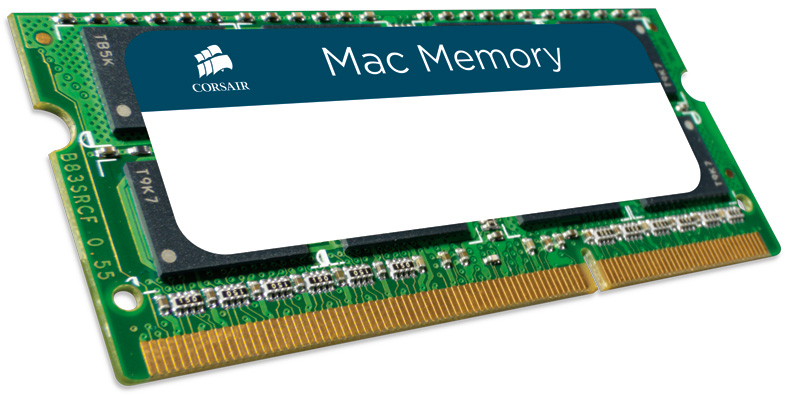
Corsair Announces 8GB and 16GB DDR3 Memory Upgrades for Apple Computers
Corsair, a worldwide designer and supplier of high-performance
components to the PC gaming hardware market, today announced of 8GB and
16GB DDR3 memory upgrade kits for Apple Mac desktop and laptop systems.
Mac systems with two memory slots have traditionally been limited to only 8GB of memory. By increasing the individual module capacity to 8GB, Corsair's latest memory upgrade kits allow Mac owners to upgrade to 10GB, 12GB, or even 16GB of memory.
Corsair's Mac memory kits are tested at Apple Developer Compatibility Labs and work with most MacBook Pro, iMac, and Mac mini systems shipped in 2011.
The new DDR3 Mac memory upgrades, like all Corsair DRAM products, are tested to exacting standards and come with a limited lifetime warranty.
"The ability to go beyond 8GB of memory will be a boon for graphics designers and video editors on the go, IT professionals who need to run Windows virtual machines simultaneously with Mac OS X, network administrators who use Macs as servers or web hosts, or anybody who wants to push their Mac to the limits of its performance," said Thi La, Vice President of Memory Products at Corsair. "Corsair's renowned service and support and our limited lifetime warranty make our Mac memory upgrades a smart investment."
The new DDR3 Mac memory kits will be available in January from Corsair's worldwide network of resellers and distributors. For more information on Corsair Mac memory upgrades please visit this page.
Source
Mac systems with two memory slots have traditionally been limited to only 8GB of memory. By increasing the individual module capacity to 8GB, Corsair's latest memory upgrade kits allow Mac owners to upgrade to 10GB, 12GB, or even 16GB of memory.
Corsair's Mac memory kits are tested at Apple Developer Compatibility Labs and work with most MacBook Pro, iMac, and Mac mini systems shipped in 2011.
The new DDR3 Mac memory upgrades, like all Corsair DRAM products, are tested to exacting standards and come with a limited lifetime warranty.
"The ability to go beyond 8GB of memory will be a boon for graphics designers and video editors on the go, IT professionals who need to run Windows virtual machines simultaneously with Mac OS X, network administrators who use Macs as servers or web hosts, or anybody who wants to push their Mac to the limits of its performance," said Thi La, Vice President of Memory Products at Corsair. "Corsair's renowned service and support and our limited lifetime warranty make our Mac memory upgrades a smart investment."
The new DDR3 Mac memory kits will be available in January from Corsair's worldwide network of resellers and distributors. For more information on Corsair Mac memory upgrades please visit this page.
Source
Thursday, December 15, 2011
Apple Unable To Beat Competitors By Applying Lawsuits, Forced To Actually Compete
There's nothing quite like the irony of trying to shut down your prime
competitor and giving their products a big boost in brand awareness
instead. It seems that there are two basic ways to compete in this
world: make a better product at a better price, or try to shut down your
competitors with lawsuits and sell your inferior product at a nice fat
mark-up. Well, unfortunately for Apple, they chose the latter. A week
ago, we brought you news
on how Apple's lawsuit against a Chinese competitor had suffered a
setback over the name "iPad" which Apple tried to take off them – the
court didn't buy Apple's arguments and the competitor kept the name.
Now, Apple have suffered a much bigger setback in Australia by taking on formidable opponent Samsung, with what appears to be a meritless lawsuit. Samsung had released a competitor product to the iPad, called the Galaxy Tab running Android, which has received good reviews. Apple tried to ban sales of the device, claiming it infringed various patents and look and feel – and it worked. Until Samsung appealed and the ruling was overturned. Oops. Samsung is now delighted with the whole fiasco, as it's given them a huge marketing boost. Samsung Australia's vice president of telecommunications, Tyler McGee said: "At the end of the day the media awareness certainly made the Galaxy Tab 10.1 a household name compared to probably what it would've been based on the investment that we would've put into it from a marketing perspective." Yes, it's probably better to compete by outcompeting your competitor, rather than use dodgy legal tactics to try and stifle them. However, now Apple have turned to a patent troll to do their dirty work for them against various competitors. We can just see Apple going far with this strategy. Is this what Steve Jobs would have wanted?
Source: The Sydney Morning Herald
Now, Apple have suffered a much bigger setback in Australia by taking on formidable opponent Samsung, with what appears to be a meritless lawsuit. Samsung had released a competitor product to the iPad, called the Galaxy Tab running Android, which has received good reviews. Apple tried to ban sales of the device, claiming it infringed various patents and look and feel – and it worked. Until Samsung appealed and the ruling was overturned. Oops. Samsung is now delighted with the whole fiasco, as it's given them a huge marketing boost. Samsung Australia's vice president of telecommunications, Tyler McGee said: "At the end of the day the media awareness certainly made the Galaxy Tab 10.1 a household name compared to probably what it would've been based on the investment that we would've put into it from a marketing perspective." Yes, it's probably better to compete by outcompeting your competitor, rather than use dodgy legal tactics to try and stifle them. However, now Apple have turned to a patent troll to do their dirty work for them against various competitors. We can just see Apple going far with this strategy. Is this what Steve Jobs would have wanted?
Source: The Sydney Morning Herald
Thursday, October 20, 2011
Apple Reports Fourth Quarter Results, Reports All-Time Record Mac and iPad Sales
Apple Corporation today announced financial results for its fiscal 2011 fourth quarter
ended September 24, 2011. The Company posted quarterly revenue of $28.27
billion and quarterly net profit of $6.62 billion, or $7.05 per diluted
share. These results compare to revenue of $20.34 billion and net
quarterly profit of $4.31 billion, or $4.64 per diluted share, in the
year-ago quarter. Gross margin was 40.3 percent compared to 36.9 percent
in the year-ago quarter. International sales accounted for 63 percent
of the quarter’s revenue.
The Company sold 17.07 million iPhones in the quarter, representing 21 percent unit growth over the year-ago quarter. Apple sold 11.12 million iPads during the quarter, a 166 percent unit increase over the year-ago quarter. The Company sold 4.89 million Macs during the quarter, a 26 percent unit increase over the year-ago quarter. Apple sold 6.62 million iPods, a 27 percent unit decline from the year-ago quarter.
“We are thrilled with the very strong finish of an outstanding fiscal 2011, growing annual revenue to $108 billion and growing earnings to $26 billion,” said Tim Cook, Apple’s CEO. “Customer response to iPhone 4S has been fantastic, we have strong momentum going into the holiday season, and we remain really enthusiastic about our product pipeline.”
“We are extremely pleased with our record September quarter revenue and earnings and with cash generation of $5.4 billion during the quarter,” said Peter Oppenheimer, Apple’s CFO. “Looking ahead to the first fiscal quarter of 2012, which will span 14 weeks rather than 13, we expect revenue of about $37 billion and we expect diluted earnings per share of about $9.30.”
Apple will provide live streaming of its Q4 2011 financial results conference call beginning at 2:00 p.m. PDT on October 18, 2011 at www.apple.com/quicktime/qtv/earningsq411. This webcast will also be available for replay for approximately two weeks thereafter.
Source: Apple
The Company sold 17.07 million iPhones in the quarter, representing 21 percent unit growth over the year-ago quarter. Apple sold 11.12 million iPads during the quarter, a 166 percent unit increase over the year-ago quarter. The Company sold 4.89 million Macs during the quarter, a 26 percent unit increase over the year-ago quarter. Apple sold 6.62 million iPods, a 27 percent unit decline from the year-ago quarter.
“We are thrilled with the very strong finish of an outstanding fiscal 2011, growing annual revenue to $108 billion and growing earnings to $26 billion,” said Tim Cook, Apple’s CEO. “Customer response to iPhone 4S has been fantastic, we have strong momentum going into the holiday season, and we remain really enthusiastic about our product pipeline.”
“We are extremely pleased with our record September quarter revenue and earnings and with cash generation of $5.4 billion during the quarter,” said Peter Oppenheimer, Apple’s CFO. “Looking ahead to the first fiscal quarter of 2012, which will span 14 weeks rather than 13, we expect revenue of about $37 billion and we expect diluted earnings per share of about $9.30.”
Apple will provide live streaming of its Q4 2011 financial results conference call beginning at 2:00 p.m. PDT on October 18, 2011 at www.apple.com/quicktime/qtv/earningsq411. This webcast will also be available for replay for approximately two weeks thereafter.
Source: Apple
Monday, October 17, 2011
Walled Garden Outfit Valve Accuses Apple Of Operating A Walled Garden
You've got to laugh at the hypocrisy of big companies sometimes. It's a
well known fact that Apple operates a very closed and controlling walled garden
eco system with all of their products, courtesy of the late Steve Jobs.
Examples include the iPhone, which can only purchase apps from the
official Apple apps store and the iPod, which can also only sync with
iTunes, both due to deliberate vendor lock-in using a combination of
hardware and software DRM (Digital Restrictions Management). Apple
claims that this is to ensure a seamless, consistent and high quality
user experience. Savvy users know this to be only half the story,
instead it's there to shut out competition and lock you in to Apple for
everything in order to charge high prices for allegedly "premium"
product. The only way to avoid this, is to jailbreak the devices (break
the DRM) which conveniently (for Apple) voids the warranty on these
expensive gadgets. Thankfully, this process is no longer underground,
due to a recent court ruling that said jailbreaking was legal, much to Apple's displeasure.
However, the equally closed Valve, with their Steam gaming platform and it's account-based DRM has accused Apple of being a closed system! They are also "concerned" about it. This happened in an interview between Bellevue-based Valve's Gabe Newell and leading games investor Ed Fries at the WTIA TechNW conference. This has been reported in The Seattle Times in Brier Dudley's blog.
The Steam platform gives the illusion of openness, because it allows such things as game backups to be made and also allows a game to be played on any number of computers (one at a time of course) simply by installing the Steam client, the game and logging in. Like Apple, you can also only purchase from its own store, of course. However, it's certainly one of the "best" DRMs out there as far as DRM goes, given the various features of the Steam client, such as auto updates and social networking. However, the huge "but" in all this though, is that Valve do not let you sell on your used Steam games as a matter of corporate policy (SSA section E,(i)), although the system to transfer game access from one account to another has always been present and correct. This removes an individual's first sale rights as defined in law, but makes games companies ecstatic, because they have complained bitterly about used game sales allegedly eating into their business, as if they have any right to that used game money in the first place. It's exactly like car companies stopping you from selling your used motor, alleging that it hurts the sales of new cars. Utter rubbish. One wonders if this unreasonable restriction would truly stand up in court if someone with money took them on?
In the interview, Fries asked if these were the best of times, or the worst. For the clearest answer to this question, let's quote from Dudley's blog. Newell replied:
The conversation then moved onto consoles, but soon returned to discussion of closed systems. Notice how these closed systems act like the worst kind of monopolies, with the company running it squeezing their partners so hard that they make no money at all. Therefore, their greed ends up killing their golden goose and the business model fails for everyone. This is just the same as expecting people to work an average 9-5 office job without pay. Ridiculous. Dudley continues with:
So there you have it. Steam is wonderfully open in the sense that developers can use it flexibly and they don't charge high commissions, but the customer (gamer) is locked in tight, like a straitjacket. How is this an open system?
As the old saying goes, it's the pot calling the kettle black. Enjoy the picture.
As well as our primary news source, thanks also go to our secondary sources linked to in the article: Techdirt, TG Daily and Wikipedia.
Source: The Seattle Times
However, the equally closed Valve, with their Steam gaming platform and it's account-based DRM has accused Apple of being a closed system! They are also "concerned" about it. This happened in an interview between Bellevue-based Valve's Gabe Newell and leading games investor Ed Fries at the WTIA TechNW conference. This has been reported in The Seattle Times in Brier Dudley's blog.
The Steam platform gives the illusion of openness, because it allows such things as game backups to be made and also allows a game to be played on any number of computers (one at a time of course) simply by installing the Steam client, the game and logging in. Like Apple, you can also only purchase from its own store, of course. However, it's certainly one of the "best" DRMs out there as far as DRM goes, given the various features of the Steam client, such as auto updates and social networking. However, the huge "but" in all this though, is that Valve do not let you sell on your used Steam games as a matter of corporate policy (SSA section E,(i)), although the system to transfer game access from one account to another has always been present and correct. This removes an individual's first sale rights as defined in law, but makes games companies ecstatic, because they have complained bitterly about used game sales allegedly eating into their business, as if they have any right to that used game money in the first place. It's exactly like car companies stopping you from selling your used motor, alleging that it hurts the sales of new cars. Utter rubbish. One wonders if this unreasonable restriction would truly stand up in court if someone with money took them on?
In the interview, Fries asked if these were the best of times, or the worst. For the clearest answer to this question, let's quote from Dudley's blog. Newell replied:
"It's a very interesting time."
"Our business is growing very rapidly both on the content side and on the service platform side so in that sense, business has never been better," Newell said. "The challenges we see looking forward are very rapidly evolving model for how value is created for customers."
After broad pursuit massively multiplayer online games, the free-to-play model is emerging as "a really interesting opportunity," he said.
But there are dark clouds forming, Newell continued, raising concerns about the closed-garden approach of platforms such as Apple's iOS.
"On the platform side, it's sort of ominous that the world seems to be moving away from open platforms," he said.
Platform providers that used to use their role to enable developers "instead view themselves as more rent guys who are essentially driving their partner margins to zero," he said.
"They build a shiny sparkling thing that attracts users and then they control people's access to those things," he said.
Newell said that "very large structural investments and structural changes" are coming over the next few years that will threaten people who create value bulding things like the open Internet.
The conversation then moved onto consoles, but soon returned to discussion of closed systems. Notice how these closed systems act like the worst kind of monopolies, with the company running it squeezing their partners so hard that they make no money at all. Therefore, their greed ends up killing their golden goose and the business model fails for everyone. This is just the same as expecting people to work an average 9-5 office job without pay. Ridiculous. Dudley continues with:
Newell reiterated his concerns about a closed model being the "wrong philosophical approach" but one that people will emulate because of the success of Apple and Xbox Live.
"I'm worried that the things that traditionally have been the source of a lot of innovation are going - there's going to be an attempt to close those off so somebody will say 'I'm tired of competing with Google, I'm tired of compeitng with Facebook, I'll apply a console model and exclude the competitors I don't like from my world.'"
Fries asked Newell to clarify whether he sees Apple as being a closed platform.
"I consider Apple to be very closed," Newell said. "Let's say you have a book business and you are charging 5 to 7 percent gross margins. You can't exist in an Apple world because they want 30 percent and they don't care that you only have 7 percent to play with."
Doesn't Valve's Steam service also extract a "tax" on game companies that use the platform, Fries asked.
Newell said Steam gets a commission if games are sold through Steam, but developers can use its free tools and services and sell their games elsewhere and "we don't take anything."
If Valve were to make a hardware platform, it would open it up to competing distribution systems because openness is important to the future of the entertainment industry, he said.
So there you have it. Steam is wonderfully open in the sense that developers can use it flexibly and they don't charge high commissions, but the customer (gamer) is locked in tight, like a straitjacket. How is this an open system?
As the old saying goes, it's the pot calling the kettle black. Enjoy the picture.
As well as our primary news source, thanks also go to our secondary sources linked to in the article: Techdirt, TG Daily and Wikipedia.
Source: The Seattle Times
Thursday, October 6, 2011
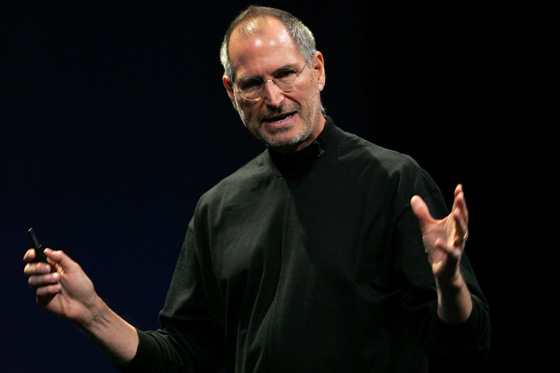
Tribute to Apple's Co-Founder, Steve Jobs
Steve Jobs
1955-2011
"Apple has lost a visionary and creative genius, and the world has lost an amazing human being. Those of us who have been fortunate enough to know and work with Steve have lost a dear friend and an inspiring mentor. Steve leaves behind a company that only he could have built, and his spirit will forever be the foundation of Apple"
Quote from Apple Co
"The world rarely sees someone who has had the profound impact Steve has
had, the effects of which will be felt for many generations to come.
For those of us lucky enough to get to work with him, it's been an
insanely great honour."
Quote from Bill Gates, Microsoft
"Steve, thank you for being a mentor and a friend. Thanks for showing
that what you build can change the world. I will miss you."
Quote from Mark Zuckerberg, Facebook
"There may be no greater tribute to Steve's success than the fact that
much of the world learned of his passing on a device he invented."
Quote from Barrack Obama, US President
"Steve Jobs transformed the way we work and play; a creative genius who will be sorely missed."
Quote from David Cameron, UK Prime Minister
Life of Steve Jobs
- Born in San Francisco in Feb 1955 to students Joanne Schieble and Syrian-born Abdulfattah Jandali - adopted by a Californian working class couple
- Had a summer job at Hewlett-Packard while at school - later worked at Atari
- Dropped out of college after six months and went travelling in India, where he became a Buddhist
- Launched Apple with school friend Steve Wozniak in 1976 - first Apple computer sold the same year
- Left Apple amid disputes in 1985 but returned in 1996 and became CEO in 1997
- Bought Pixar animation company in 1986 for $10m
- Married in a Buddhist ceremony in 1991 - has three children with his wife and a daughter from a previous relationship
- Had a personal wealth estimated at $8.3bn (£5.4bn) in 2010
- Diagnosed with pancreatic cancer in 2003, and after three periods of sickness leave, resigns as Apple CEO in August 2011
Saturday, August 27, 2011
Steve Jobs Hangs His Boots as Apple CEO
Regarded as the heart and soul of Apple Inc., Steve Jobs has decided to step down as the CEO of the company, making way for the board-elected Tim Cook to take up the position. This marks a graceful exit of one of the major architects of the technology industry as we know it. "Steve's extraordinary vision and leadership saved Apple and guided it to its position as the world's most innovative and valuable technology company," notes a company press release. Jobs will stay on as the Chairman of the company he co-founded. His replacement, Tim Cook, has previously served as the COO of the company, with 13 years of service to the company in various positions.
A letter written by the outgoing Apple CEO follows.
Sources: Businesswire, Apple
I have always said if there ever came a day when I could no longer meet my duties and expectations as Apple's CEO, I would be the first to let you know. Unfortunately, that day has come.
I hereby resign as CEO of Apple. I would like to serve, if the Board sees fit, as Chairman of the Board, director and Apple employee.
As far as my successor goes, I strongly recommend that we execute our succession plan and name Tim Cook as CEO of Apple.
I believe Apple's brightest and most innovative days are ahead of it. And I look forward to watching and contributing to its success in a new role.
I have made some of the best friends of my life at Apple, and I thank you all for the many years of being able to work alongside you.
Steve
Wednesday, July 20, 2011
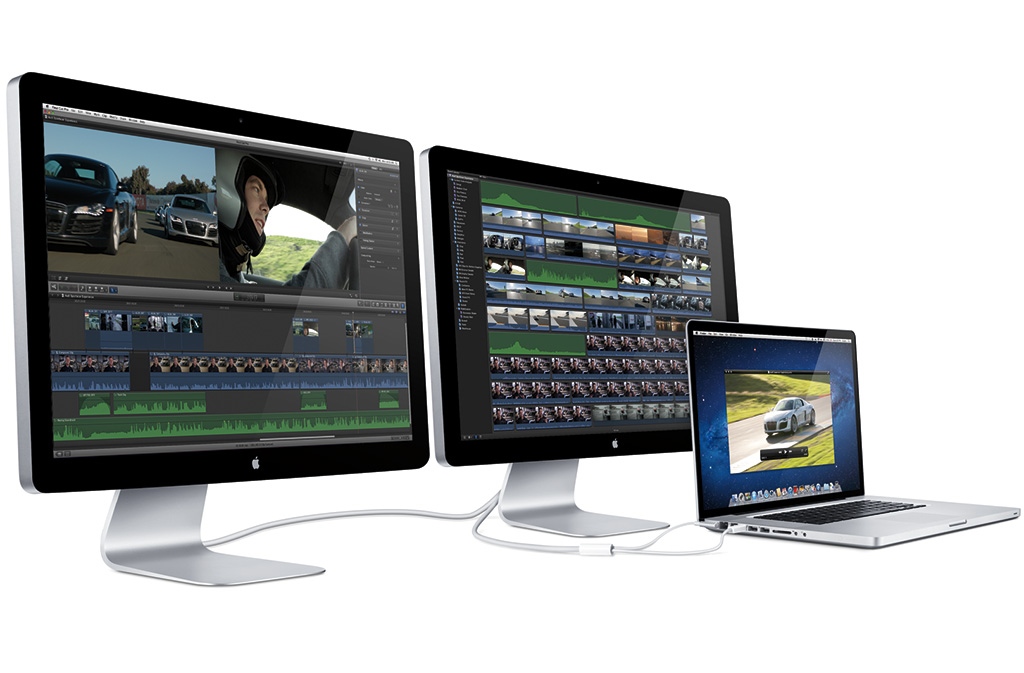
Apple Introduces World’s First Thunderbolt Display
“The Apple Thunderbolt Display is the ultimate docking station for your Mac notebook,” said Philip Schiller, Apple’s senior vice president of Worldwide Product Marketing. “With just one cable, users can dock with their new display and connect to high performance peripherals, network connections and audio devices.”
With a beautiful 16:9 edge-to-edge glass design, the Thunderbolt Display uses IPS technology to provide a brilliant image across an ultra wide 178 degree viewing angle. Any Thunderbolt-enabled Mac
The Thunderbolt Display is the world’s first display to include Thunderbolt I/O technology. Featuring two bi-directional channels with transfer speeds up to an amazing 10Gbps each, each Thunderbolt port delivers PCI Express directly to external peripherals such as high performance storage and RAID arrays, supports DisplayPort for high resolution displays and works with existing adapters for HDMI, DVI and VGA displays. Thunderbolt-based Macs with discrete graphics can drive two external displays giving professional users over 7 million additional pixels of display real estate and the ability to daisy chain additional Thunderbolt devices, as well as video and audio capture devices.
The Thunderbolt Display includes an ambient light sensor which automatically adjusts the display brightness based on external lighting conditions and uses only as much energy as necessary to provide an optimum viewing experience. Made with mercury-free LED technology, arsenic-free glass and highly recyclable materials, the new display meets Energy Star 5.0 requirements and achieves EPEAT Gold status. The new display contains no brominated flame retardants and all cables and components are PVC-free.
Pricing & Availability
The new Thunderbolt Display will be available within the next 60 days through the Apple Store (www.apple.com), Apple’s retail stores and Apple Authorized Resellers for a suggested retail price of $999 (US). The Apple Thunderbolt Display requires a Mac with a Thunderbolt I/O port.
Source
Apple Updates MacBook Air With Next Gen. Processors, Thunderbolt & Backlit Keyboard
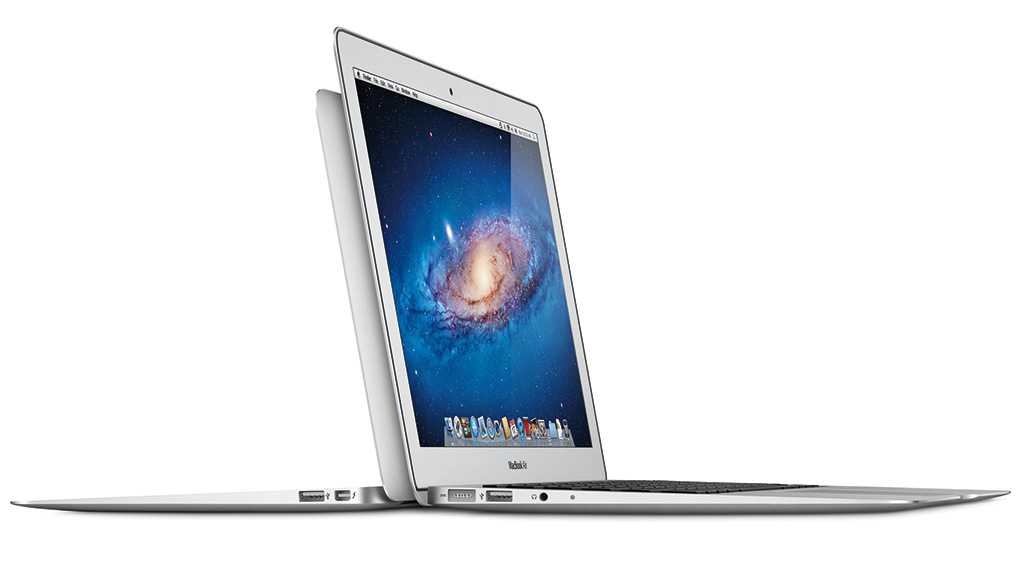
“Portable, affordable and powerful, MacBook Air is the ultimate everyday notebook,” said Philip Schiller, Apple’s senior vice president of Worldwide Product Marketing. “MacBook Air features our most advanced technology and is an ideal match for Lion, especially with its new Multi-Touch gestures, full-screen apps, Mission Control and Mac App Store.”
MacBook Air is available in 11-inch and 13-inch models that easily slip into a briefcase, purse or bag. The MacBook Air’s durable aluminum unibody enclosure measures an incredibly thin 0.11-inches at its thinnest point and 0.68-inches at its thickest. Flash storage allows MacBook Air to turn on instantly and deliver fast data access, improved reliability and incredible energy efficiency. The 11-inch model weighs 2.38 pounds and provides up to 5 hours of battery life, while the 13-inch weighs 2.96 pounds and provides up to 7 hours of battery life.
With the latest Intel Core i5 and Core i7 dual-core processors, the new MacBook Air is up to twice as fast as the previous generation and has all the power you need for editing photos and movies, making FaceTime calls, playing games, and working with documents and presentations. MacBook Air also features Intel HD Graphics 3000 and offers up to 4GB of faster 1333 MHz memory.
Thunderbolt I/O technology provides expansion possibilities never before available to MacBook Air users. Through a single cable, users can connect to high performance
MacBook Air comes with a full size backlit keyboard and an innovative glass Multi-Touch trackpad. Designed for comfort and ease of typing, the backlit keyboard uses a sensor to automatically detect a change in ambient lighting and adjusts the keyboard brightness for any environment. The Multi-Touch trackpad supports Lion’s new Multi-Touch gestures such as momentum scrolling, tapping or pinching your fingers to zoom in on a web page or image, and swiping left or right to turn a page or switch between full screen apps.
MacBook Air also features a brilliant, high resolution LED backlit display that is amazingly thin yet has the resolution of a much larger, bulkier screen. With ultra-fast Wi-Fi, you can wirelessly download apps from the Mac App Store, get music and movies from iTunes, back up data to Time Capsule and quickly and easily share files using AirDrop. MacBook Air includes Bluetooth for wireless peripherals and two USB ports for easy connectivity for the wired and wireless devices you use every day.
Apple makes the industry’s greenest notebook lineup and the new MacBook Air meets Energy Star 5.2 requirements and achieves EPEAT Gold status. Each unibody enclosure is made of highly recyclable aluminum and comes standard with energy efficient LED-backlit displays that are mercury-free and made with arsenic-free glass. Mac notebooks contain no brominated flame retardants, are PVC-free and are constructed of recyclable materials.
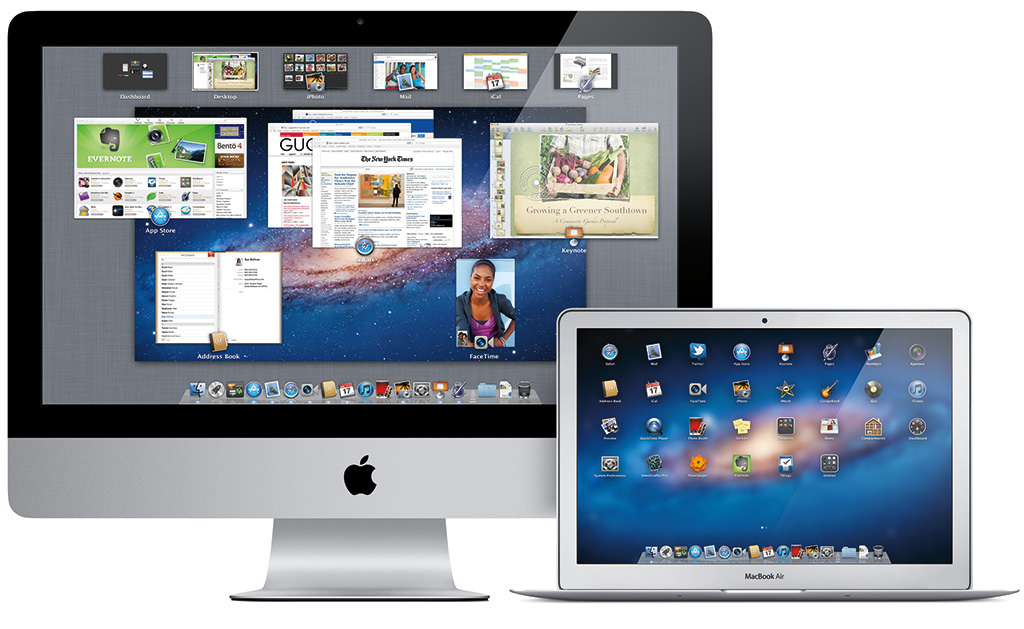
Every new MacBook Air comes with Mac OS X Lion, the eighth major release of the world’s most advanced operating system, and iLife apps for creating and sharing great photos, movies and music. Lion introduces more than 250 new features to the Mac, including Multi-Touch gestures; system-wide support for full screen apps; Mission Control, an innovative view of everything running on your Mac; the Mac App Store, the best place to find and explore great software, built right into the OS; Launchpad, a new home for all your apps; and a completely redesigned Mail app.
Pricing & Availability
The 11-inch and 13-inch MacBook Air are available for order on the Apple Store (www.apple.com) today and in Apple’s retail stores and Apple Authorized Resellers starting July 21. The 1.6 GHz 11-inch MacBook Air is available in two models, one with 2GB of memory and 64GB of flash storage for a suggested retail price of $999 (US), and one with 4GB of memory and 128GB of flash storage for $1,199 (US). The 1.7 GHz 13-inch MacBook Air comes in two configurations, one with 4GB of memory and 128GB of flash storage for a suggested retail price of $1,299 (US), and one with 4GB of memory and 256GB of flash storage for $1,599 (US). Configure-to-order options and accessories include a 1.8 GHz Core i7 processor, additional flash storage, MacBook Air SuperDrive and a USB Ethernet Adapter.
Additional technical specifications and configure-to-order options and accessories are available here.
Mac OS X Lion Available Today From the Mac App Store
“Lion is the best version of OS X yet, and we’re thrilled that users around the world can download it starting today,” said Philip Schiller, Apple’s senior vice president of Worldwide Product Marketing. “Lion makes upgrading a
Additional new features in Lion include:
- Resume, which conveniently brings your apps back exactly how you left them when you restart your Mac or quit and relaunch an app;
- Auto Save, which automatically and continuously saves your documents as you work;
- Versions, which automatically records the history of your document as you create it, and gives you an easy way to browse, revert and even copy and paste from previous versions; and
- AirDrop, which finds nearby Macs and automatically sets up a peer-to-peer wireless connection to make transferring files quick and easy.
Mac OS X Lion is available as an upgrade to Mac OS X version 10.6.6 Snow Leopard® from the Mac App Store for $29.99 (US). Lion is the easiest OS X upgrade and at around 4GB, it is about the size of an HD movie from the iTunes Store. Users who do not have broadband access at home, work or school can download Lion at Apple retail stores and later this August, Lion will be made available on a USB thumb drive through the Apple Store® (www.apple.com) for $69 (US). Mac OS X Lion Server requires Lion and is available from the Mac App Store for $49.99 (US).
Lion requires an Intel-based Mac with a Core 2 Duo, i3, i5, i7 or Xeon processor and 2GB of RAM. Lion is an upgrade and can be installed on all your authorized personal Macs. Details regarding Business and Education licensing can be found at apple.com/macosx.
Source
Subscribe to:
Posts (Atom)