MSI is rolling out its new generation GT685—the ultimate gaming machine.
In addition to featuring the Intel second generation Core™i7 quad core
processor, it is the first laptop to sport the nVidia GeForce GTX 580M,
the world’s fastest discrete graphics card, 32G DDR3 of memory, and
accelerated dual hard disk architecture. It comes with Dynaudio and THX
TruStudio Pro smart wrap around sound as well as a full HD screen. The
MSI GT685 was awarded Editor's Choice by Thai IT mag Notebook4game.com
and to ensure that it remains the top-selling gaming NB brand in
Thailand, MSI is holding activities on university campuses to give
gaming enthusiasts the opportunity to experience its gaming laptops.
Source
Showing posts with label MSI. Show all posts
Friday, February 24, 2012
Wednesday, February 15, 2012
MSI Announces its Radeon HD 7700 Series Products
Today the internationally renowned graphics card and mainboard maker MSI
released two new graphics cards. The R7770-2PMD1GD5/OC and
R7750-PMD1GD5/OC feature the new Radeon HD 7700 GPU based on AMD's
latest 28nm process with support for PCI Express Gen3. Core voltage
adjustment is supported by the MSI R7700 graphics card. The
R7770-2PMD1GD5/OC GPU core frequency can be overclocked by up to 32.4%
using MSI's exclusive Afterburner graphics card overclocking utility to
reach an amazing 1.35GHz*! MSI's R7700 series graphics cards also
feature a customized dual-fan thermal design that effectively reduces
the GPU operating temperature and ensures stable performance. Integrated
support for 3D video, high-quality DisplayPort 1.2 and HDMI 1.4a
outputs, along with AMD's exclusive Eyefinity multiple display output
technologies make these the perfect choice for enthusiasts.
MSI's Exclusive Afterburner Core Voltage Adjustment Technology
MSI R7770-2PMD1GD5/OC supports core voltage adjustment technology and can be overclocked by up to 32.4% using the popular Afterburner overclocking utility. The core frequency can even reach up to 1.35GHz with just air-cooling. Enthusiasts can also use the Afterburner APP on their Android / iOS handheld devices to monitor and overclock their graphics cards. Other Afterburner features include 5 configuration settings, Predator audio-video capture, and Kombustor burn-in testing to help enthusiasts optimize their graphics performance.
Dual-Fan Design for Improved Cooling
MSI R7700 graphics cards feature a dual-fan design and expanded heatsink. An air flow double that of normal, single-fan products helps with fast heat dissipation and lower temperatures. Afterburner's advanced fan speed control allows the Dual Fan solution to run at different speeds depending on the GPU temperature to give full control over the graphics card's thermal performance.
PCI Express Gen 3 Graphics and new 28nm process
MSI R7700 graphics cards support the latest PCI Express Gen 3 standard. If used with a CPU and mainboard that supports PCI Express Gen 3, this doubles the bandwidth to a staggering 32GB/s and delivers the best possible in-game performance. MSI R7700 graphics card are also equipped with a GPU based on AMD's latest 28nm process so their performance and processing power outstrips the previous generation of products based on the 40nm process as well.
Support for Next Generation Displays and AMD Eyefinity Multi-Display Technology
MSI R7700 graphics cards provide DisplayPort 1.2 and HMDI 1.4a outputs that support 3D video, 7.1 channel lossless TrueHD video, and DTS-HD audio. They also support AMD's proprietary Eyefinity multiple display technology. The support for next-generation audio & video standards makes the MSI R7700 family the best choice for professionals and gamers.
Solid Capacitors for Improved Reliability
All solid capacitors are used by MSI on the R7700 graphics card to improve durability. Due to their low temperature and high efficiency the aluminum core delivers high stability even under high loads over extended periods of time and has a service life of more than ten years.
For more product information on the R7770-2PMD1GD5/OC, please visit this page.
For more product information on the R7750-PMD1GD5/OC, please visit this page.
Source
MSI's Exclusive Afterburner Core Voltage Adjustment Technology
MSI R7770-2PMD1GD5/OC supports core voltage adjustment technology and can be overclocked by up to 32.4% using the popular Afterburner overclocking utility. The core frequency can even reach up to 1.35GHz with just air-cooling. Enthusiasts can also use the Afterburner APP on their Android / iOS handheld devices to monitor and overclock their graphics cards. Other Afterburner features include 5 configuration settings, Predator audio-video capture, and Kombustor burn-in testing to help enthusiasts optimize their graphics performance.
Dual-Fan Design for Improved Cooling
MSI R7700 graphics cards feature a dual-fan design and expanded heatsink. An air flow double that of normal, single-fan products helps with fast heat dissipation and lower temperatures. Afterburner's advanced fan speed control allows the Dual Fan solution to run at different speeds depending on the GPU temperature to give full control over the graphics card's thermal performance.
PCI Express Gen 3 Graphics and new 28nm process
MSI R7700 graphics cards support the latest PCI Express Gen 3 standard. If used with a CPU and mainboard that supports PCI Express Gen 3, this doubles the bandwidth to a staggering 32GB/s and delivers the best possible in-game performance. MSI R7700 graphics card are also equipped with a GPU based on AMD's latest 28nm process so their performance and processing power outstrips the previous generation of products based on the 40nm process as well.
Support for Next Generation Displays and AMD Eyefinity Multi-Display Technology
MSI R7700 graphics cards provide DisplayPort 1.2 and HMDI 1.4a outputs that support 3D video, 7.1 channel lossless TrueHD video, and DTS-HD audio. They also support AMD's proprietary Eyefinity multiple display technology. The support for next-generation audio & video standards makes the MSI R7700 family the best choice for professionals and gamers.
Solid Capacitors for Improved Reliability
All solid capacitors are used by MSI on the R7700 graphics card to improve durability. Due to their low temperature and high efficiency the aluminum core delivers high stability even under high loads over extended periods of time and has a service life of more than ten years.
For more product information on the R7770-2PMD1GD5/OC, please visit this page.
For more product information on the R7750-PMD1GD5/OC, please visit this page.
Source
Tuesday, February 7, 2012
MSI Z77A-GD55 Motherboard Pictured
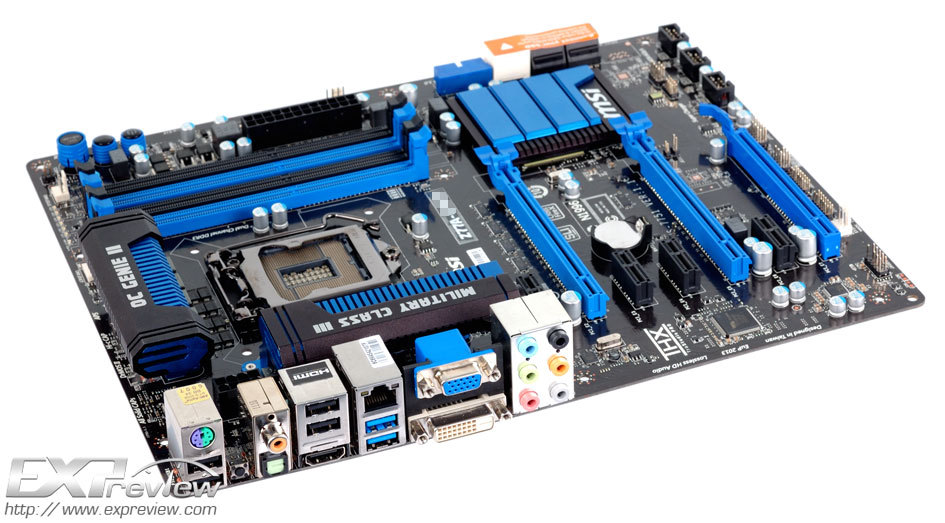
Here are the first pictures of MSI's Z77A-GD55 motherboard. The GD55 is a notch below the GD65
in terms of its feature-set, and will likely hold a cost-benefit
sweetspot. The motherboard is designed to support today's "Sandy
Bridge", and tomorrow's "Ivy Bridge" Core processors in the LGA1155
package, and is based on Intel's Z77 "Panther Point" chipset. The CPU is
powered by a lighter 9-phase VRM compared to the 12-phase VRM on the
GD65. It retains the expansion slot layout of its elder brother,
consisting of two PCI-Express 3.0 x16 (x16/NC or x8/x8), four PCIe x1,
and one PCIe 2.0 x4 (physical x16).
The Z77A-GD55 has two fewer SATA 6 Gb/s ports compared to the GD65, all its internal ports are wired to the PCH. That's two SATA 6 Gb/s and four SATA 3 Gb/s. There are no eSATA ports. Further, there are no third-party USB 3.0 controllers, either. All four of the USB 3.0 ports (two on the rear panel, two via front-panel header) are wired to the PCH. Display connectivity includes DVI, D-Sub, and HDMI. 8-channel HD audio with optical and coaxial SPDIF outputs, and gigabit Ethernet make for the rest of its connectivity.
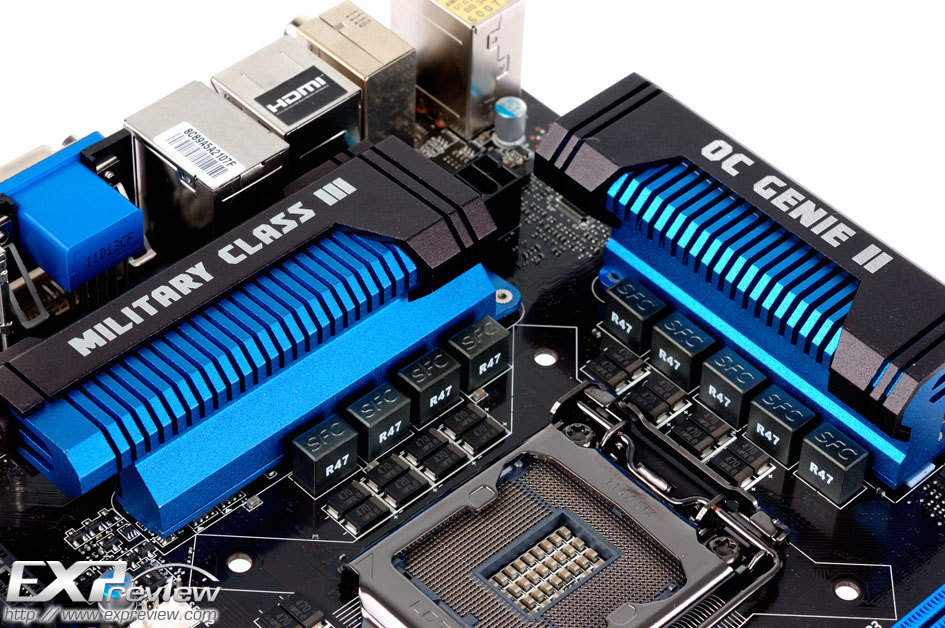
Most of the overclocker-friendly features from the GD65 are retained, albeit stripped down. For example, the consolidated voltage measurement points are still there, but just as exposed solder points instead of sockets that can hold multimeter leads; same with OC Genie. MSI's UEFI BIOS with plenty of tuning features is still there, but unlike with the GD65, there's no redundant BIOS. While in the pictures about the complete model name is masked, reliable sources hinted at it being the Z77A-GD55.
Source: Expreview
The Z77A-GD55 has two fewer SATA 6 Gb/s ports compared to the GD65, all its internal ports are wired to the PCH. That's two SATA 6 Gb/s and four SATA 3 Gb/s. There are no eSATA ports. Further, there are no third-party USB 3.0 controllers, either. All four of the USB 3.0 ports (two on the rear panel, two via front-panel header) are wired to the PCH. Display connectivity includes DVI, D-Sub, and HDMI. 8-channel HD audio with optical and coaxial SPDIF outputs, and gigabit Ethernet make for the rest of its connectivity.
Most of the overclocker-friendly features from the GD65 are retained, albeit stripped down. For example, the consolidated voltage measurement points are still there, but just as exposed solder points instead of sockets that can hold multimeter leads; same with OC Genie. MSI's UEFI BIOS with plenty of tuning features is still there, but unlike with the GD65, there's no redundant BIOS. While in the pictures about the complete model name is masked, reliable sources hinted at it being the Z77A-GD55.
Source: Expreview
Friday, February 3, 2012
Production-Grade MSI Z77A-GD65 Motherboard Pictured
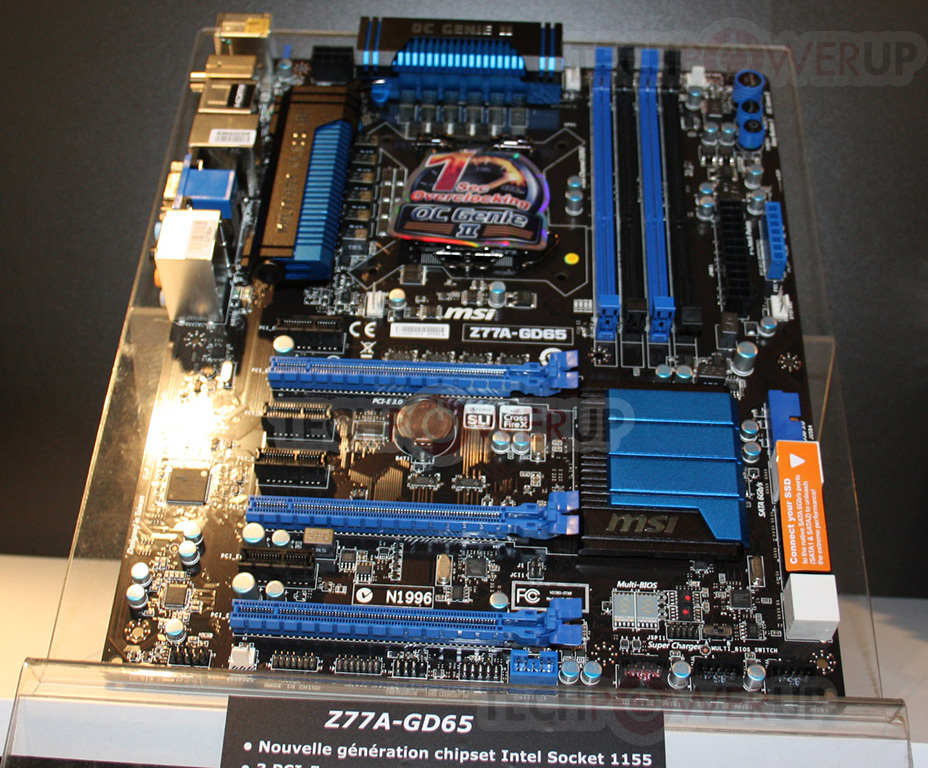
At CES, TechPowerUp got to check out MSI's Z77A-GD65
motherboard in its baby-suit, with just basic heatsinks, as the
production ones were getting finalized. At the IT Partners show, we got
to see the production model of this board, complete with its final VRM
and PCH heatsink design.
The Z77A-GD65 uses a 9-phase VRM to power the CPU. Expansion slots include two PCI-Express 3.0 x16 (x16/NC or x8/x8, depending on the second slot being populated), one PCI-Express 2.0 x16 (electrical x4, wired to the PCH), and four PCIe x1. Storage connectivity include four SATA 6 Gb/s (two from the PCH, two from a third-party controller), and four SATA 3 Gb/s ports. Display connectivity includes D-Sub, DVI, and HDMI. Other features include a number of USB 3.0, USB 2.0 ports, 8-channel HD audio, and features for overclockers such as consolidated voltage measurement points, redundant UEFI BIOS, and OC Genie. It is slated for April.
Source
The Z77A-GD65 uses a 9-phase VRM to power the CPU. Expansion slots include two PCI-Express 3.0 x16 (x16/NC or x8/x8, depending on the second slot being populated), one PCI-Express 2.0 x16 (electrical x4, wired to the PCH), and four PCIe x1. Storage connectivity include four SATA 6 Gb/s (two from the PCH, two from a third-party controller), and four SATA 3 Gb/s ports. Display connectivity includes D-Sub, DVI, and HDMI. Other features include a number of USB 3.0, USB 2.0 ports, 8-channel HD audio, and features for overclockers such as consolidated voltage measurement points, redundant UEFI BIOS, and OC Genie. It is slated for April.
Source
Tuesday, January 31, 2012
MSI Launches its Radeon HD 7950 Graphics Card Lineup
Today, leading global graphics card and mainboard manufacturer MSI
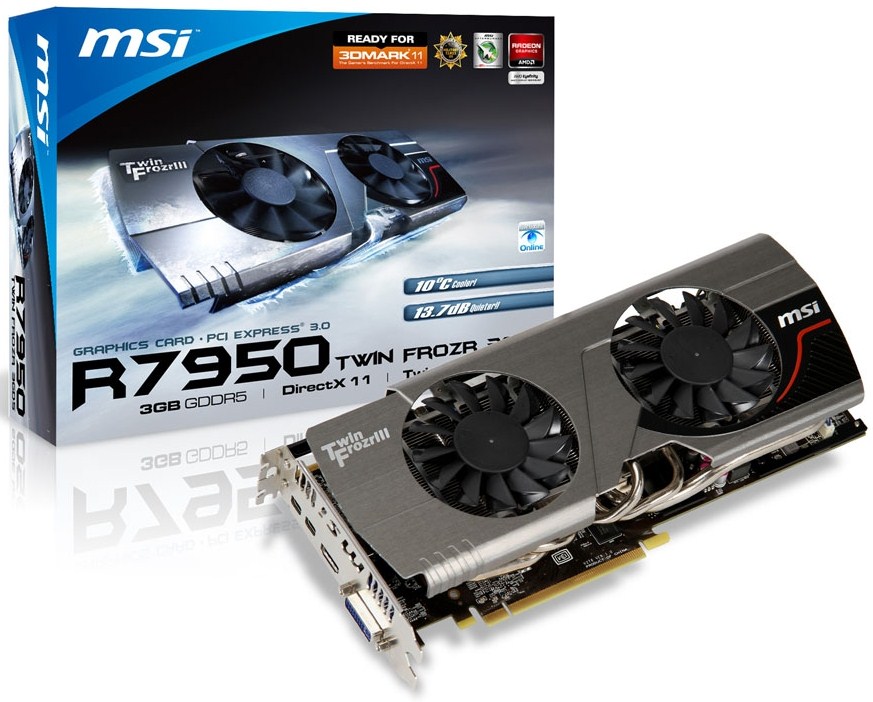
officially announces the R7950 Twin Frozr 3GD5/OC graphics card built on
the latest AMD 28nm Radeon HD7950 GPU with PCI Express Gen 3 support.
MSI's exclusive Twin Frozr III thermal design features dual 8cm
Propeller Blade fans to achieve up to 10℃ lower GPU temperatures and
13.7dB less noise under full load! MSI's exclusive Afterburner
overclocking software can be used to unleash the core and memory voltage
potential providing up to 37.5% overclockability!
The R7950 Twin Frozr 3GD5/OC uses Military Class III components include Hi-c CAP, Super Ferrite Choke and All Solid capacitors that have passed MIL-STD-810G level testing to deliver the best graphics card performance and quality to gamers. MSI further expands its R7900 with two new products, the R7970-2PMD3GD5/OC and R7950-2PMD3GD5/OC to provide the best choice for gamers.
Exclusive Twin Frozr III Thermal design 10℃ lower temperatures and 13.7dB less noise
The MSI R7950 Twin Frozr 3GD5/OC adopts the advanced Twin Frozr III thermal design with dual 8cm fans with Propeller Blade technology that provide 20% more air flow. Nickel plated copper heat sink, high density cooling fins, and two 8mm Superpipe heat-pipes. Under full load, the R7950 Twin Frozr 3GD5/OC achieves a GPU temperature that is 10℃ lower and produces 13.7dB less noise than a reference design cooler! Users will be able to enjoy their all-new and high-end gaming experience with superior performance and cooling capacity.
Exclusive GPU and memory overvoltage for up to 37.5% higher overclockability
MSI's R7900 graphics card series support world's popular overclocking software MSI Afterburner with GPU and memory overvoltage function, where the GPU can be overclocked by up to 37.5%; unleashing the full power of the graphics card! With MSI Afterburner, users can remotely monitor and overclock their graphics card through the MSI Afterburner app for Android and iOS devices! Afterburner also supports advanced fan speed control, 5 configuration pre-sets, Predator video capture function, and the Kombustor burn-in test and benchmarking application.
Military Class III components for the best performance and stability
The MSI R7950 Twin Frozr 3GD5/OC uses Military Class III components that have been passed rigorous testing methods based on the MIL-STD-810G standard. The Hi-c CAP has eight times the lifespan of solid-state capacitors, the super ferrite chokes eliminates high frequency noise while under load and the all-solid capacitor have a ten year lifespan with excellent stability even under heavy loads for prolonged periods of time. The MSI R7950 Twin Frozr 3GD5/OC with Military Class III components provides gamers with the best in performance and stability.
*Afterburner V2.2.0 Beta 11 and newer supports GPU and memory voltage adjustments on the R7900 GPU series. Overclocking results may vary.
For more information, visit the product pages of: Source
The R7950 Twin Frozr 3GD5/OC uses Military Class III components include Hi-c CAP, Super Ferrite Choke and All Solid capacitors that have passed MIL-STD-810G level testing to deliver the best graphics card performance and quality to gamers. MSI further expands its R7900 with two new products, the R7970-2PMD3GD5/OC and R7950-2PMD3GD5/OC to provide the best choice for gamers.
Exclusive Twin Frozr III Thermal design 10℃ lower temperatures and 13.7dB less noise
The MSI R7950 Twin Frozr 3GD5/OC adopts the advanced Twin Frozr III thermal design with dual 8cm fans with Propeller Blade technology that provide 20% more air flow. Nickel plated copper heat sink, high density cooling fins, and two 8mm Superpipe heat-pipes. Under full load, the R7950 Twin Frozr 3GD5/OC achieves a GPU temperature that is 10℃ lower and produces 13.7dB less noise than a reference design cooler! Users will be able to enjoy their all-new and high-end gaming experience with superior performance and cooling capacity.
Exclusive GPU and memory overvoltage for up to 37.5% higher overclockability
MSI's R7900 graphics card series support world's popular overclocking software MSI Afterburner with GPU and memory overvoltage function, where the GPU can be overclocked by up to 37.5%; unleashing the full power of the graphics card! With MSI Afterburner, users can remotely monitor and overclock their graphics card through the MSI Afterburner app for Android and iOS devices! Afterburner also supports advanced fan speed control, 5 configuration pre-sets, Predator video capture function, and the Kombustor burn-in test and benchmarking application.
Military Class III components for the best performance and stability
The MSI R7950 Twin Frozr 3GD5/OC uses Military Class III components that have been passed rigorous testing methods based on the MIL-STD-810G standard. The Hi-c CAP has eight times the lifespan of solid-state capacitors, the super ferrite chokes eliminates high frequency noise while under load and the all-solid capacitor have a ten year lifespan with excellent stability even under heavy loads for prolonged periods of time. The MSI R7950 Twin Frozr 3GD5/OC with Military Class III components provides gamers with the best in performance and stability.
*Afterburner V2.2.0 Beta 11 and newer supports GPU and memory voltage adjustments on the R7900 GPU series. Overclocking results may vary.
For more information, visit the product pages of: Source
Tuesday, January 17, 2012
MSI Interceptor Nighhawk Military-Class Case Pictured
MSI took a plunge into gaming PC cases with its
Interceptor series Nighthawk ATX mid-tower. This case bears the
"Military Class" branding that MSI uses on some of its high-end PC
motherboards. Measuring 180(W) x 475(L) x 448(H) mm, the Nighthawk is
one of the more spacious mid-towers. It features four 5.25-inch drive
bays (all tool-free), six 3.5-inch bays (five tool-free), and black
interiors with a dash of deep blue.
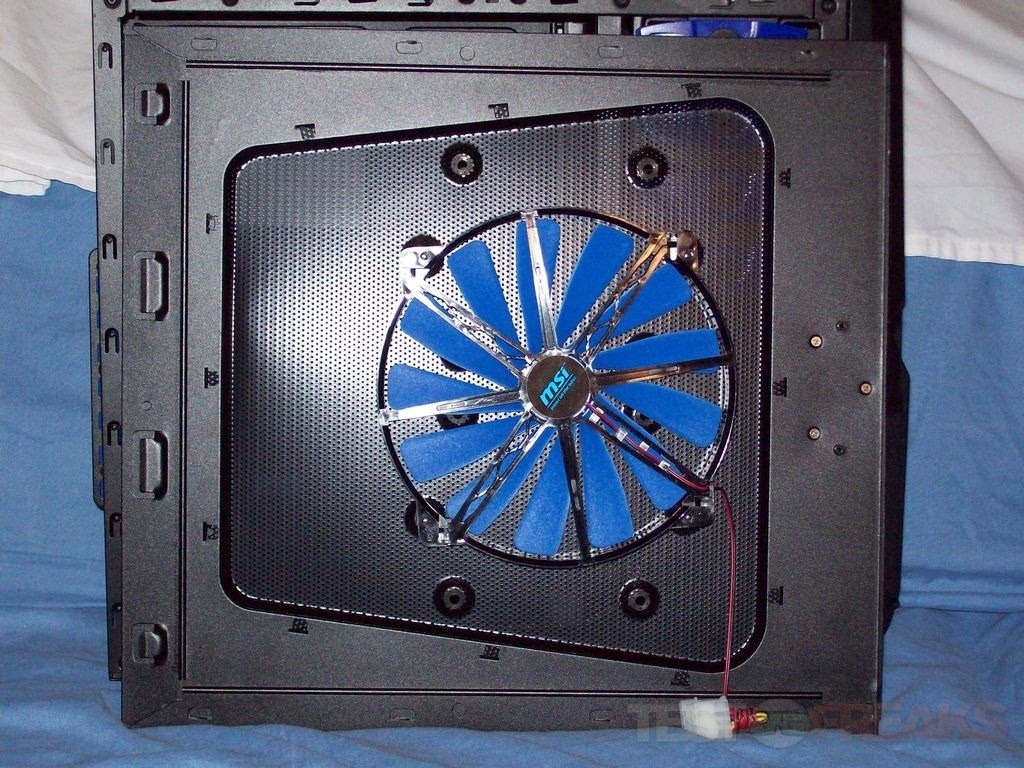
It has a feature-rich front-panel, including a 12-in-1 multi-format memory card reader, audio, USB 3.0 and USB 2.0 ports. Cooling system includes a 120 mm blue LED-lit front-intake fan, a 200 mm opaque side-panel intake fan, and a 120 mm rear exhaust fan. There are provisions for two 120 mm top fans, three 120 mm side fans (replacing the 200 mm fan), and a 120 mm bottom intake. Backed by a 3 year warranty, the MSI Interceptor Nighhawk is priced at US $79.99. A full review of this case with more pictures can be read at the source.
Source: TestFreaks
It has a feature-rich front-panel, including a 12-in-1 multi-format memory card reader, audio, USB 3.0 and USB 2.0 ports. Cooling system includes a 120 mm blue LED-lit front-intake fan, a 200 mm opaque side-panel intake fan, and a 120 mm rear exhaust fan. There are provisions for two 120 mm top fans, three 120 mm side fans (replacing the 200 mm fan), and a 120 mm bottom intake. Backed by a 3 year warranty, the MSI Interceptor Nighhawk is priced at US $79.99. A full review of this case with more pictures can be read at the source.
Source: TestFreaks
Tuesday, January 10, 2012
MSI Z77 Motherboards and Next-Gen GUS Pictured
MSI showed off its upcoming socket LGA1155 motherboards based on Intel's
Z77 chipset, designed to accommodate next-generation "Ivy Bridge" Core
processors out of the box. Like many other motherboard manufacturers
with similar motherboards on display, MSI's Z77 motherboards lack the
final designs of their typically fancy-looking heatsinks over the
chipset and VRM, and make do with basic ones that get the job done, and
more importantly, let visitors take a look at the components in use more
closely. MSI displayed two motherboards, the mid-range Z77A-GD65, and
premium Z77A-GD80.
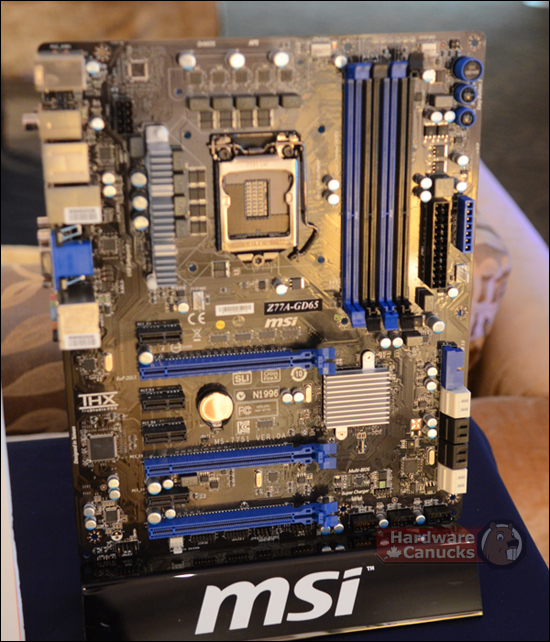
The Z77A-GD80 is designed for gaming PCs with up to two graphics cards, with a strong CPU VRM. The CPU is powered by a 14-phase VRM, complete with SFC chokes, compact DrMOS, and server-grade capacitors. There are three long PCIe slots on the board, but it appears like only two of the three are wired to the CPU, the third one to the Z77 PCH. Those two slots are PCIe 3.0 capable. SATA ports include four 6 Gb/s capable ones. The USB 3.0 front-panel header is angled like the SATA ports. Other connectivity includes Intel Thunderbolt, USB 3.0, display connections that include DVI, D-Sub, and HDMI; 8-channel HD audio, GbE, and eSATA.
The Z77A-GD65 is the more affordable board. It uses a simple 9-phase VRM to power the CPU, but has the same expansion slot layout as the GD80, with two PCIe 3.0 x16 (x16/NC or x8/x8), one PCIe 2.0 x16 (x4, wired to PCH), and four PCIe 2.0 x1. It even has the same number and kind of SATA ports. Its connectivity might lack Thunderbolt.
MSI also showed of GUS (graphics upgrade system), an external graphics card enclosure. This box connects to a host PC/Mac using Thunderbolt (essentially PCIe 2.0 x4), and internally has a PCIe x16 slot and related power delivery circuitry. It draws power from an external source.
Source: HardwareCanucks
The Z77A-GD80 is designed for gaming PCs with up to two graphics cards, with a strong CPU VRM. The CPU is powered by a 14-phase VRM, complete with SFC chokes, compact DrMOS, and server-grade capacitors. There are three long PCIe slots on the board, but it appears like only two of the three are wired to the CPU, the third one to the Z77 PCH. Those two slots are PCIe 3.0 capable. SATA ports include four 6 Gb/s capable ones. The USB 3.0 front-panel header is angled like the SATA ports. Other connectivity includes Intel Thunderbolt, USB 3.0, display connections that include DVI, D-Sub, and HDMI; 8-channel HD audio, GbE, and eSATA.
The Z77A-GD65 is the more affordable board. It uses a simple 9-phase VRM to power the CPU, but has the same expansion slot layout as the GD80, with two PCIe 3.0 x16 (x16/NC or x8/x8), one PCIe 2.0 x16 (x4, wired to PCH), and four PCIe 2.0 x1. It even has the same number and kind of SATA ports. Its connectivity might lack Thunderbolt.
MSI also showed of GUS (graphics upgrade system), an external graphics card enclosure. This box connects to a host PC/Mac using Thunderbolt (essentially PCIe 2.0 x4), and internally has a PCIe x16 slot and related power delivery circuitry. It draws power from an external source.
Source: HardwareCanucks
Tuesday, January 3, 2012
MSI Launches the Big Bang-XPower II X79 Motherboard
After a few months of teasing, MSI's newest Big Bang series motherboard,
the XPower II, has now been officially introduced, and is marketed as
the perfect solution for 'xtreme' overclockers and gamers. Powered by
Intel's X79 chipset, the XPower II supports Sandy Bridge E processors
and features a 22-phase PWM design with Hybrid Digital Power for an
output of up to 770 W, Military Class III components (Hi-c CAP, SFC,
Solid CAP, DrMOS II), dual 8-pin CPU power connectors, plus seven
PCI-Express x16 (four are PCIe 3.0, the rest are 2.x) slots enabling
4-way SLI or Quad CrossFireX GPU setups.
MSI's flagship X79 board also has a SuperPipe-enhanced passive cooling system, eight DDR3-2400 memory slots supporting up to 128 GB of RAM, PCIe 'CeaseFire' switches, V-check points, a Direct OC button, six SATA 6.0 Gbps and four SATA 3.0 Gbps ports, dual Gigabit Ethernet, Realtek ALC892 7.1-channel audio (backed by Creative's Sound Blaster X-Fi MB2 solution), six USB 3.0 ports (four on the back panel, two via a header next to a PCIe power connector), a debug LED, Click BIOS II (UEFI), Multi-BIOS, one FireWire connector, and the Winki 3 instant-on OS.
Source
MSI's flagship X79 board also has a SuperPipe-enhanced passive cooling system, eight DDR3-2400 memory slots supporting up to 128 GB of RAM, PCIe 'CeaseFire' switches, V-check points, a Direct OC button, six SATA 6.0 Gbps and four SATA 3.0 Gbps ports, dual Gigabit Ethernet, Realtek ALC892 7.1-channel audio (backed by Creative's Sound Blaster X-Fi MB2 solution), six USB 3.0 ports (four on the back panel, two via a header next to a PCIe power connector), a debug LED, Click BIOS II (UEFI), Multi-BIOS, one FireWire connector, and the Winki 3 instant-on OS.
Source
Wednesday, December 28, 2011
MSI Announces MultiConnect Panel and Voice Genie
Internationally renowned mainboard and graphic card manufacturer MSI
announces today two new exclusive products: MultiConnect Panel and Voice
Genie.
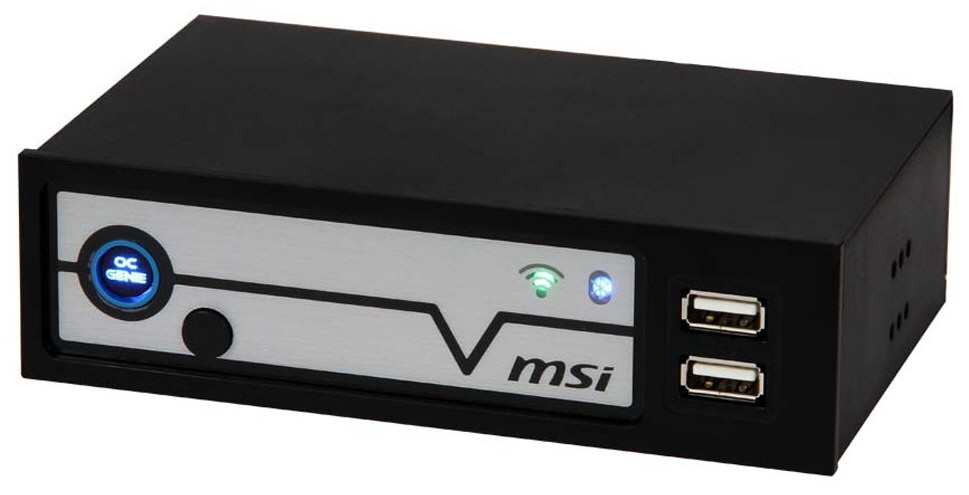
With support for Wi-Fi 802.11n and Bluetooth 3.0 wireless transfer, MSI's MultiConnect Panel provides an OC Genie button for MSI mainboard users to instantly increase system performance with a simple push of a button! The MSI-exclusive Super Charger on the MultiConnect Panel also allows users to quickly charge their smart-phones, tablet PCs, wireless keyboards, and wireless mice via any MSI X79 mainboard.
MSI's groundbreaking Voice Genie is the world's first voice control technology with system startup support without the need for keyboard or mouse operation! Aside from turning on and off the system, users can even enable and disable OC Genie, open a web browser, wake up the system, and set the system to sleep mode all via voice command! Full compatibility with all MSI X79 Series mainboards helps bring added value to the MSI computing experience with MultiConnect Panel and Voice Genie.
MultiConnect Panel with built-in Bluetooth, Wi-Fi, and USB
The MultiConnect Panel is equipped with a high-speed Bluetooth 3.0 module for quick connection via smart-phones and tablets, and synchronization with notebooks. The Wi-Fi feature on the panel supports the latest 802.11n protocol with a transfer baud rate of up to 150 Mbps, equipping desktop systems with true wireless networking capability. The OC Genie button on the panel allows users to boost system performance with the MSI-exclusive OC Genie technology with one simple push. The USB ports connecting with the Super Charger on the mainboard supply power with voltage 3 times higher than conventional USB ports, allowing users to quickly charge their smart-phones or tablets. The MultiConnect Panel has a standard 5.25-inch bezel design to fit in any 5.25-inch bay on a computer case, making it truly friendly and handy to use.
Voice Genie: The world's first voice control system with system startup control
MSI has been devoted to providing consumers with more intelligent technology for human-machine interaction. Voice Genie, a convenient-to-use voice control system, is the world's first voice control system with system startup control. Users can command the system to power on/off, open the browser, run MSI's exclusive Control Center, set the system to sleep mode, wake up the system, and run other functions via voice control. In addition, Voice Genie comes equipped with two sets of voice recognition and supports up to 8 customized voice commands. With Voice Genie, users can enjoy additional convenience in lieu of the keyboard and mouse for some of the most common PC operations.
Mainboards Supporting Voice Genie
Source
With support for Wi-Fi 802.11n and Bluetooth 3.0 wireless transfer, MSI's MultiConnect Panel provides an OC Genie button for MSI mainboard users to instantly increase system performance with a simple push of a button! The MSI-exclusive Super Charger on the MultiConnect Panel also allows users to quickly charge their smart-phones, tablet PCs, wireless keyboards, and wireless mice via any MSI X79 mainboard.
MSI's groundbreaking Voice Genie is the world's first voice control technology with system startup support without the need for keyboard or mouse operation! Aside from turning on and off the system, users can even enable and disable OC Genie, open a web browser, wake up the system, and set the system to sleep mode all via voice command! Full compatibility with all MSI X79 Series mainboards helps bring added value to the MSI computing experience with MultiConnect Panel and Voice Genie.
MultiConnect Panel with built-in Bluetooth, Wi-Fi, and USB
The MultiConnect Panel is equipped with a high-speed Bluetooth 3.0 module for quick connection via smart-phones and tablets, and synchronization with notebooks. The Wi-Fi feature on the panel supports the latest 802.11n protocol with a transfer baud rate of up to 150 Mbps, equipping desktop systems with true wireless networking capability. The OC Genie button on the panel allows users to boost system performance with the MSI-exclusive OC Genie technology with one simple push. The USB ports connecting with the Super Charger on the mainboard supply power with voltage 3 times higher than conventional USB ports, allowing users to quickly charge their smart-phones or tablets. The MultiConnect Panel has a standard 5.25-inch bezel design to fit in any 5.25-inch bay on a computer case, making it truly friendly and handy to use.
Voice Genie: The world's first voice control system with system startup control
MSI has been devoted to providing consumers with more intelligent technology for human-machine interaction. Voice Genie, a convenient-to-use voice control system, is the world's first voice control system with system startup control. Users can command the system to power on/off, open the browser, run MSI's exclusive Control Center, set the system to sleep mode, wake up the system, and run other functions via voice control. In addition, Voice Genie comes equipped with two sets of voice recognition and supports up to 8 customized voice commands. With Voice Genie, users can enjoy additional convenience in lieu of the keyboard and mouse for some of the most common PC operations.
Mainboards Supporting Voice Genie
Source
Friday, December 16, 2011
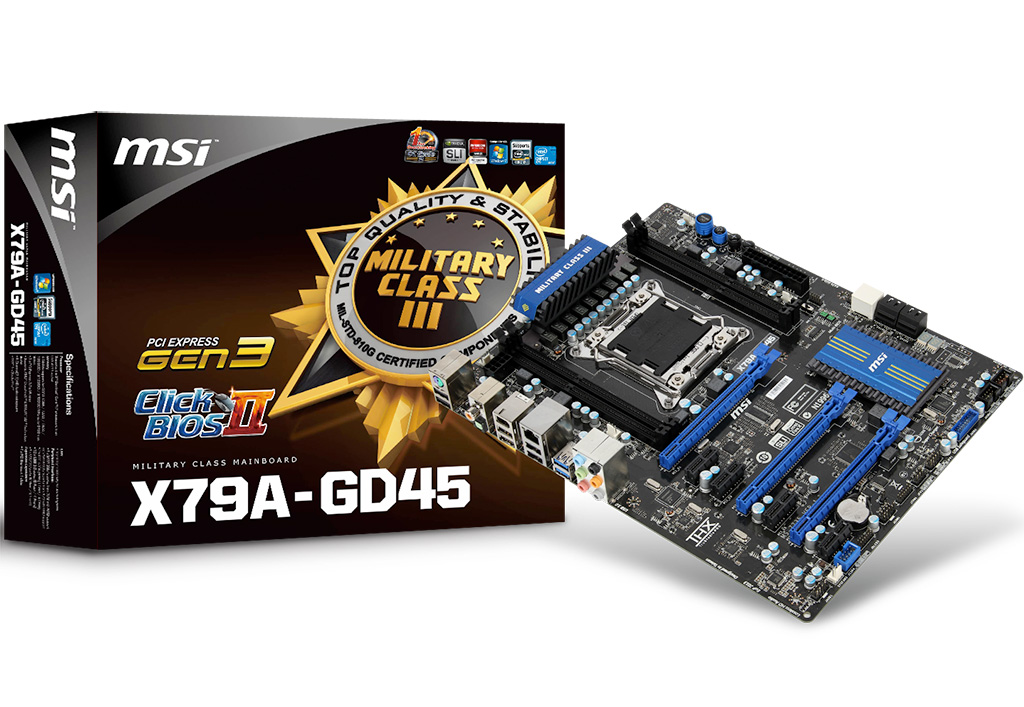
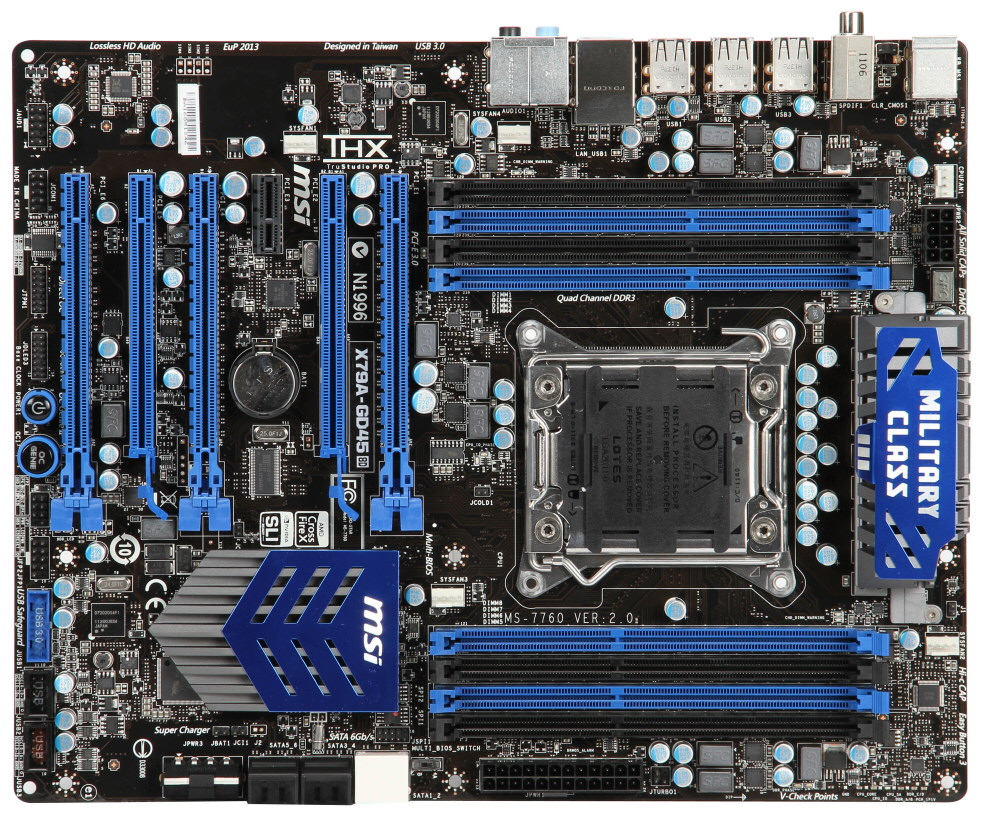
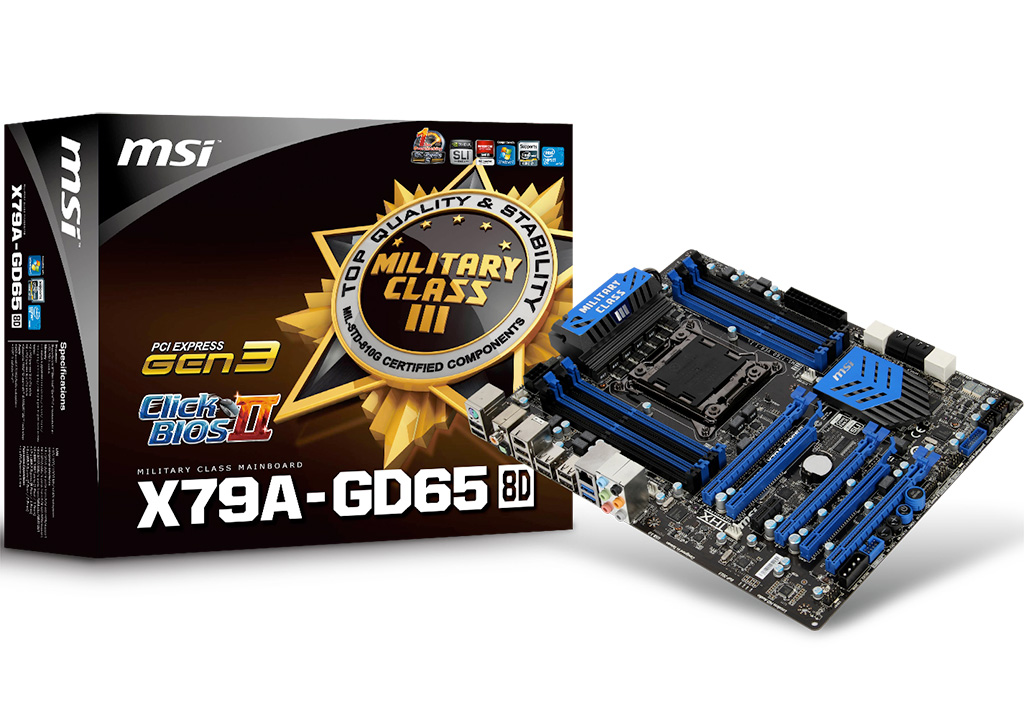
MSI Intros the X79A-GD45 (8D) LGA2011 Motherboard Supporting 128 GB of RAM
Taiwanese company MSI has today unveiled the eight DIMM version of its
X79A-GD45 motherboard released last month. This new, module-enriched
board is called X79A-GD45 (8D), it supports LGA2011 (Sandy Bridge-E)
processors, and, according to MSI, can handle up to 128 GB of RAM
(G.Skill will need to take notice).
The X79A-GD45 (8D) features Military Class III components (DrMOS II, Hi-C CAP, Solid CAP, Super Ferrite Choke), the mentioned eight (DDR3-2400) memory slots, two SATA 6.0 Gbps and four SATA 3.0 Gbps ports, plus three PCI-Express 3.0 x16 and two PCIe 2.0 x16 slots.
MSI's board also comes with one PCIe x1 slot, Gigabit Ethernet, four USB 3.0 ports (two on the back plate, two via a header), 7.1-channel audio, Click BIOS II (UEFI), and the OC Genie II overclocking function. The X79A-GD45 (8D) has yet to be priced but since its quad-DIMM sibling costs 195 Euro, we're thinking it will go over the 200 Euro mark.
Source
The X79A-GD45 (8D) features Military Class III components (DrMOS II, Hi-C CAP, Solid CAP, Super Ferrite Choke), the mentioned eight (DDR3-2400) memory slots, two SATA 6.0 Gbps and four SATA 3.0 Gbps ports, plus three PCI-Express 3.0 x16 and two PCIe 2.0 x16 slots.
MSI's board also comes with one PCIe x1 slot, Gigabit Ethernet, four USB 3.0 ports (two on the back plate, two via a header), 7.1-channel audio, Click BIOS II (UEFI), and the OC Genie II overclocking function. The X79A-GD45 (8D) has yet to be priced but since its quad-DIMM sibling costs 195 Euro, we're thinking it will go over the 200 Euro mark.
Source
Tuesday, November 15, 2011
MSI Announces All-New X79 Motherboard Series Featuring Military Class III Components
Leading international mainboard and graphics card manufacturer MSI today
announces the official release of its X79A-GD65 (8D), X79A-GD65,
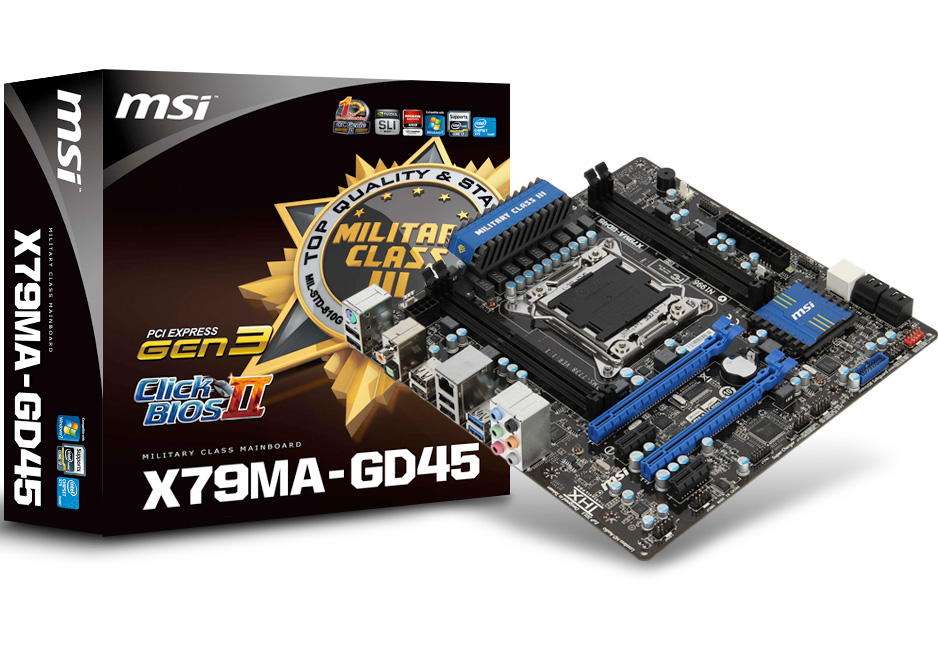
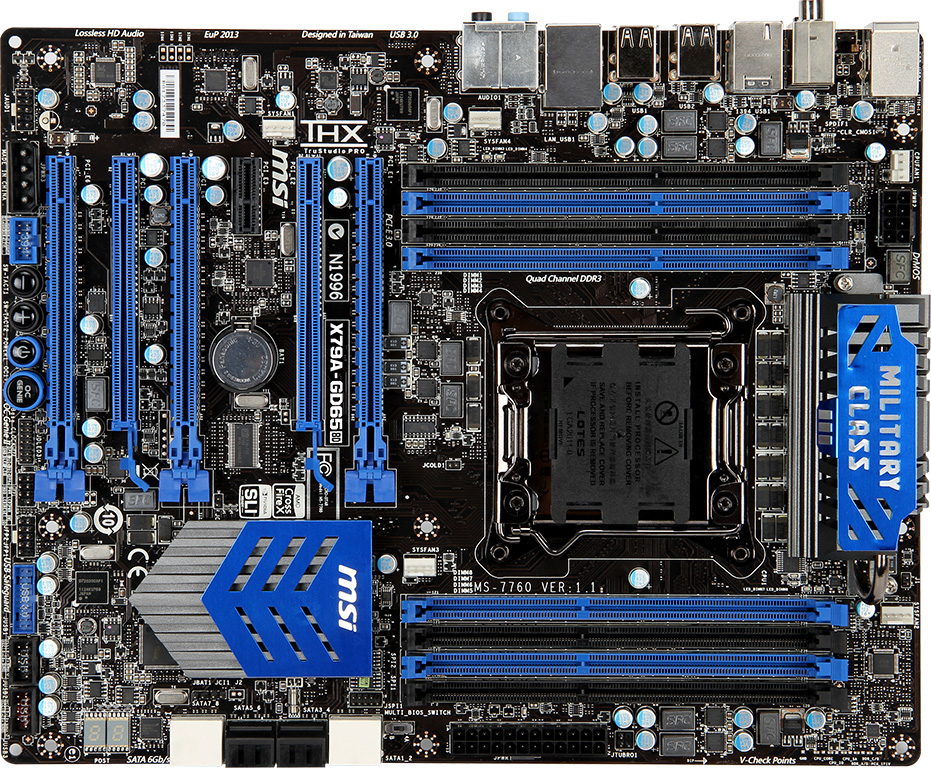
X79A-GD45, and X79MA-GD45 mainboards. The new mainboards are based on Intel's latest X79 chipset and uses the LGA 2011 socket supporting the 2nd
generation Core i7 processors. The X79A-GD65 (8D) features with 8 memory
DIMMs, supports 16GB DDR3 memory modules, bringing maximum capacity up
to a staggering 128GB! For superior quality and stability, MSI X79
series mainboards adopts Military Class III components. With DrMOS II -
the next generation of DrMOS with improved double thermal protection -
the lifetime of components is maximized, even in warmer environments or
when the machine is heavily overclocked.
MSI X79 series mainboards also feature the latest PCI Express Gen 3 bus and MSI's proprietary Click BIOS II for maximum performance and user convenience. When taking into account all of the other advanced technologies supported such as 3-Way NVIDIA SLI and 4-way AMD CrossFireX multi-GPU processing technology, THX TruStudio PRO sound, Multi-BIOS II, Control Center II, and Super Charger, MSI X79-series mainboards are simply the best choice for enthusiasts!
New Military Class III Components and the Next-gen DrMOS: DrMOS II
MSI X79 series mainboards maintains MSI's commitment to product stability and reliability by introducing Military Class III components. In addition to the use of Tantalum core capacitors (Hi-c CAP), Super Ferrite Chokes (SFC) and Solid Capacitors (Solid CAP), MSI now incorporates next-generation DrMOS II design. While competitors are just beginning to adopt a DrMOS solution, MSI's DrMOS II provides an integrated and fully-automated Double Thermal Protection to maximize the lifespan of components – even in warmer environments or when heavily overclocked. All Military Class III components have passed MIL-STD-810G certification, making MSI's Military Class III components synonymous with premium quality and ultimate stability.
Double the Bandwidth with PCI Express Gen 3
MSI's X79 mainboards support the latest PCI Express Gen 3 standard to deliver a staggering 32GB/s of bandwidth, double that of the previous generation. PCI Express Gen 3 support can also be enabled or disabled through the BIOS interface to ensure compatibility with graphics cards regardless of whether users use a PCI Express Gen 3 graphics card!
World's 1st Unified UEFI & Software Graphical Interface – Click BIOS II
MSI's Click BIOS II is the world's 1st to provide a unified graphical user interface under both UEFI & Windows. System settings can be adjusted using the mouse or even LCD touch control under different environments. Click BIOS II can not only save overclocking settings to a USB storage device but also upload them for sharing with other overclocking enthusiasts. This convenient and intuitive design is the result of continual technological breakthrough developed by MSI for its flagship mainboard line.
Easiest One-second Overclocking Technology – OC Genie II
MSI's proprietary OC Genie II can achieve amazing performance increases in just one second. CPU and memory performance are optimized without compromising system stability, significantly saving the time required by overclockers for fine-tuning. Once the user enables OC Genie on MSI's X79 mainboards, the clock rate on the Intel Core i7-3960X Extreme Edition processor pumped from a default of 3.3GHz to 4.0GHz. The 21% increase enables users to enjoy the performance boost from overclocking with ease.
Comprehensive Support for Multi-GPU Processing Technology
MSI X79 mainboards fully support 4-way AMD CrossFireX and 3-way NVIDIA SLI multi-GPU processing technologies, providing the most scalability and performance for gamers who require extreme gaming performance.
THX TruStudio PRO Surround Sound Technology for the Best Audio Experience
MSI X79 series mainboards are all equipped with THX TruStudio PRO audio technology for the best sound quality. Experience the most immersive surround sound effects when you are watching Blu-ray movies, other media, or playing 3D games!
Multi-BIOS II Offers Safe and Convenient BIOS Switching
MSI's X79 mainboards support the latest Multi-BIOS II technology. The integrated dual BIOS design improves safety and convenience by allowing enthusiasts to use a switch on the mainboard to manually switch between different BIOS setups when one is corrupted by overclocking or other factors.
Super Charger Charges Your iPad / iPhone / Smart Phone, Even When Computer is Powered Off
MSI's X79 mainboards support Super Charger fast charging technology to deliver triple the current of standard USB 2.0 interfaces. Even if your computer is switched off, you’ll still be able to quickly recharge your iPad/iPhone or smart phone to ensure you always stay connected!
For more information, visit the product pages of: Source
MSI X79 series mainboards also feature the latest PCI Express Gen 3 bus and MSI's proprietary Click BIOS II for maximum performance and user convenience. When taking into account all of the other advanced technologies supported such as 3-Way NVIDIA SLI and 4-way AMD CrossFireX multi-GPU processing technology, THX TruStudio PRO sound, Multi-BIOS II, Control Center II, and Super Charger, MSI X79-series mainboards are simply the best choice for enthusiasts!
New Military Class III Components and the Next-gen DrMOS: DrMOS II
MSI X79 series mainboards maintains MSI's commitment to product stability and reliability by introducing Military Class III components. In addition to the use of Tantalum core capacitors (Hi-c CAP), Super Ferrite Chokes (SFC) and Solid Capacitors (Solid CAP), MSI now incorporates next-generation DrMOS II design. While competitors are just beginning to adopt a DrMOS solution, MSI's DrMOS II provides an integrated and fully-automated Double Thermal Protection to maximize the lifespan of components – even in warmer environments or when heavily overclocked. All Military Class III components have passed MIL-STD-810G certification, making MSI's Military Class III components synonymous with premium quality and ultimate stability.
Double the Bandwidth with PCI Express Gen 3
MSI's X79 mainboards support the latest PCI Express Gen 3 standard to deliver a staggering 32GB/s of bandwidth, double that of the previous generation. PCI Express Gen 3 support can also be enabled or disabled through the BIOS interface to ensure compatibility with graphics cards regardless of whether users use a PCI Express Gen 3 graphics card!
World's 1st Unified UEFI & Software Graphical Interface – Click BIOS II
MSI's Click BIOS II is the world's 1st to provide a unified graphical user interface under both UEFI & Windows. System settings can be adjusted using the mouse or even LCD touch control under different environments. Click BIOS II can not only save overclocking settings to a USB storage device but also upload them for sharing with other overclocking enthusiasts. This convenient and intuitive design is the result of continual technological breakthrough developed by MSI for its flagship mainboard line.
Easiest One-second Overclocking Technology – OC Genie II
MSI's proprietary OC Genie II can achieve amazing performance increases in just one second. CPU and memory performance are optimized without compromising system stability, significantly saving the time required by overclockers for fine-tuning. Once the user enables OC Genie on MSI's X79 mainboards, the clock rate on the Intel Core i7-3960X Extreme Edition processor pumped from a default of 3.3GHz to 4.0GHz. The 21% increase enables users to enjoy the performance boost from overclocking with ease.
Comprehensive Support for Multi-GPU Processing Technology
MSI X79 mainboards fully support 4-way AMD CrossFireX and 3-way NVIDIA SLI multi-GPU processing technologies, providing the most scalability and performance for gamers who require extreme gaming performance.
THX TruStudio PRO Surround Sound Technology for the Best Audio Experience
MSI X79 series mainboards are all equipped with THX TruStudio PRO audio technology for the best sound quality. Experience the most immersive surround sound effects when you are watching Blu-ray movies, other media, or playing 3D games!
Multi-BIOS II Offers Safe and Convenient BIOS Switching
MSI's X79 mainboards support the latest Multi-BIOS II technology. The integrated dual BIOS design improves safety and convenience by allowing enthusiasts to use a switch on the mainboard to manually switch between different BIOS setups when one is corrupted by overclocking or other factors.
Super Charger Charges Your iPad / iPhone / Smart Phone, Even When Computer is Powered Off
MSI's X79 mainboards support Super Charger fast charging technology to deliver triple the current of standard USB 2.0 interfaces. Even if your computer is switched off, you’ll still be able to quickly recharge your iPad/iPhone or smart phone to ensure you always stay connected!
For more information, visit the product pages of: Source

Tuesday, November 8, 2011
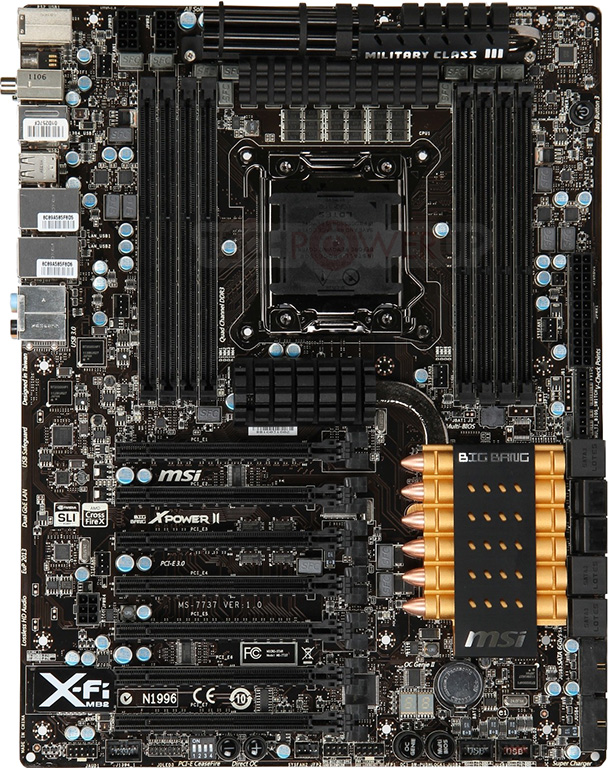
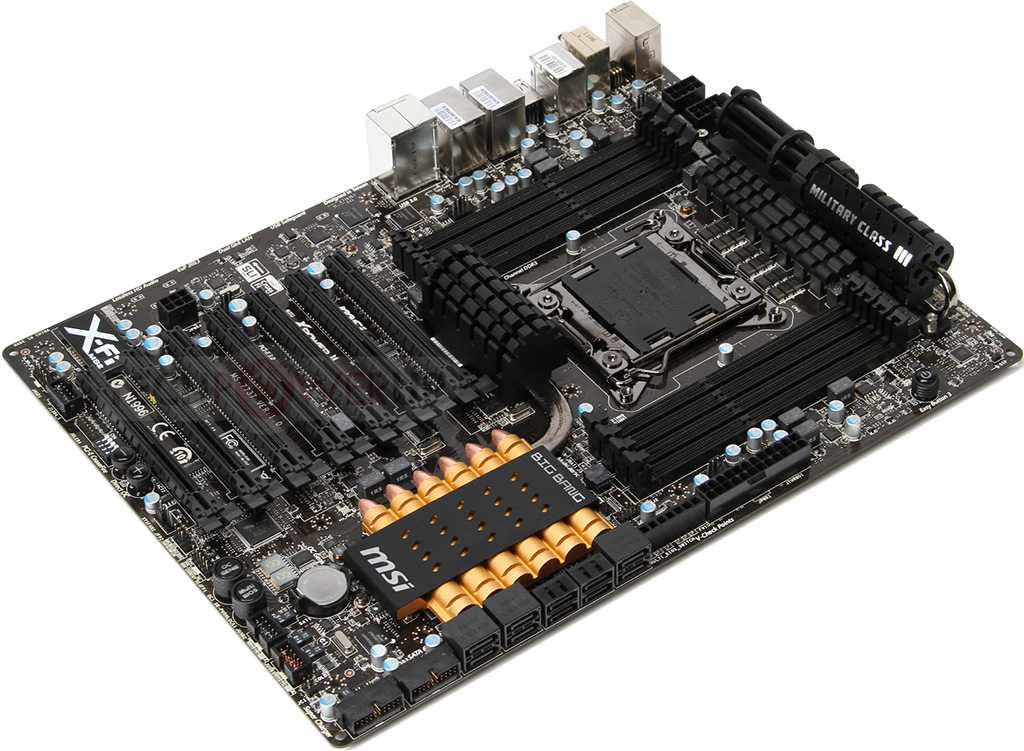
MSI Big Bang XPower II X79 Monstrosity Smiles For The Camera
MSI is among the most secretive companies with their socket LGA2011
motherboard early information as the big Sandy Bridge-E day approaches
(mid-November), yet we managed to score some early pictures of their
top-end product from our spy-satellites and a network of cold war era
retirees. Enter the MSI Big Bang XPower II, the company's top-tier
socket LGA2011 motherboard for enthusiasts. This board is designed in
the XL-ATX form-factor, and will fit in cases with at least 10 expansion
slot bays. Thanks to the added board area, it's able to accommodate
both a strong VRM, and high room for expansion (with eight DDR3 memory
slots and seven PCI-Express slots).
To begin with, the LGA2011 socket is powered by a 24-phase VRM that makes use of driver-MOSFETs, solid-chokes, and High-C POSCAP capacitors. The memory is powered by a 4-phase VRM. The board draws power, apart from the 24-pin ATX, from two 8-pin EPS connectors, and an optional 6-pin PCIe (to stabilize PCIe slot power delivery). We can see many accessories to this VRM, such as phase-loading LEDs, and consolidated voltage measurement points. We are particularly intrigued by the design of the heatsinks over the VRM and chipset. The one over the VRM looks like the barrels of a Gatling gun, while the one over the chipset looks like a small piece from an ammo belt. You will either love it or detest it.
Moving on to expansion, although the LGA2011 processor gives out 32 PCI-Express 3.0 lanes for graphics, the board is facing a lane budget deficit to wire its seven PCI-Experss x16 slots. Perhaps there is a PCI-Express bridge chip to give out additional lanes. The lane configuration is not known.
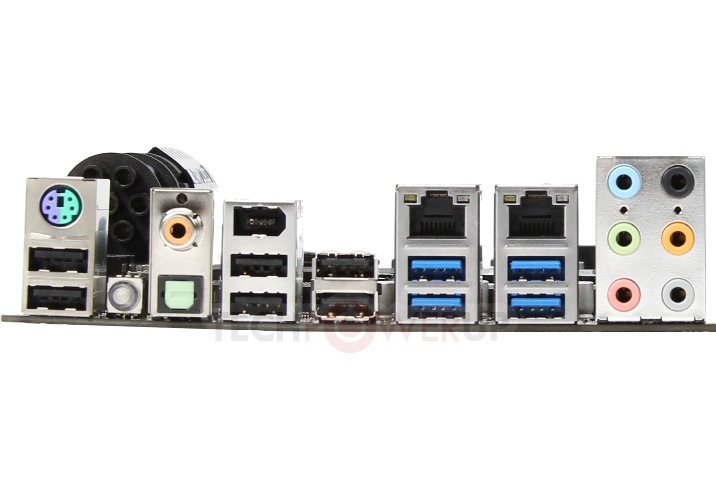
With storage connectivity, this board will give you a total of six SATA 6 Gb/s ports, from which two come from the X79 PCH, and four from additional controllers. Apart from the two 6 Gb/s ports, the X79 chipset also gives out four SATA 3 Gb/s ports. There are no eSATA ports. The board has a total of eight USB 3.0 ports, all driven by Renesas-made controllers, out of which four are on the rear panel, and four by internal headers. A nice touch here is that the front-panel headers are angled and laid beside the SATA port clusters.
The board features a high SNR (signal-noise-ratio) HD audio CODEC (probably ALC889), backed by Creative's X-Fi MB2 software that gives it even higher fidelity and more features. X-Fi MB2 software works on top of the HDA CODEC's native drivers, and so there is zero scope for any audio driver-related problems. The CODEC is wired to 8+2 channel analog outputs, optical and coaxial SPDIF outputs. There are two gigabit Ethernet connections, and surprisingly, both are driven by Intel-made gigabit Ethernet controllers. One of the two is driven by a compact 8257x series chip wired to the chipset's GbE lane, while the other is a full-fledged PCIe GbE controller. Both are backed by Intel's solid ProNetwork software and low-overhead drivers. Firewire and USB 2.0 make for the rest of the connectivity.
The MSI BigBang XPower II will be backed by a feature-rich UEFI firmware. Expect it to be among the most premium LGA2011 boards.
Source
To begin with, the LGA2011 socket is powered by a 24-phase VRM that makes use of driver-MOSFETs, solid-chokes, and High-C POSCAP capacitors. The memory is powered by a 4-phase VRM. The board draws power, apart from the 24-pin ATX, from two 8-pin EPS connectors, and an optional 6-pin PCIe (to stabilize PCIe slot power delivery). We can see many accessories to this VRM, such as phase-loading LEDs, and consolidated voltage measurement points. We are particularly intrigued by the design of the heatsinks over the VRM and chipset. The one over the VRM looks like the barrels of a Gatling gun, while the one over the chipset looks like a small piece from an ammo belt. You will either love it or detest it.
Moving on to expansion, although the LGA2011 processor gives out 32 PCI-Express 3.0 lanes for graphics, the board is facing a lane budget deficit to wire its seven PCI-Experss x16 slots. Perhaps there is a PCI-Express bridge chip to give out additional lanes. The lane configuration is not known.
With storage connectivity, this board will give you a total of six SATA 6 Gb/s ports, from which two come from the X79 PCH, and four from additional controllers. Apart from the two 6 Gb/s ports, the X79 chipset also gives out four SATA 3 Gb/s ports. There are no eSATA ports. The board has a total of eight USB 3.0 ports, all driven by Renesas-made controllers, out of which four are on the rear panel, and four by internal headers. A nice touch here is that the front-panel headers are angled and laid beside the SATA port clusters.
The board features a high SNR (signal-noise-ratio) HD audio CODEC (probably ALC889), backed by Creative's X-Fi MB2 software that gives it even higher fidelity and more features. X-Fi MB2 software works on top of the HDA CODEC's native drivers, and so there is zero scope for any audio driver-related problems. The CODEC is wired to 8+2 channel analog outputs, optical and coaxial SPDIF outputs. There are two gigabit Ethernet connections, and surprisingly, both are driven by Intel-made gigabit Ethernet controllers. One of the two is driven by a compact 8257x series chip wired to the chipset's GbE lane, while the other is a full-fledged PCIe GbE controller. Both are backed by Intel's solid ProNetwork software and low-overhead drivers. Firewire and USB 2.0 make for the rest of the connectivity.
The MSI BigBang XPower II will be backed by a feature-rich UEFI firmware. Expect it to be among the most premium LGA2011 boards.
Source
Friday, November 4, 2011
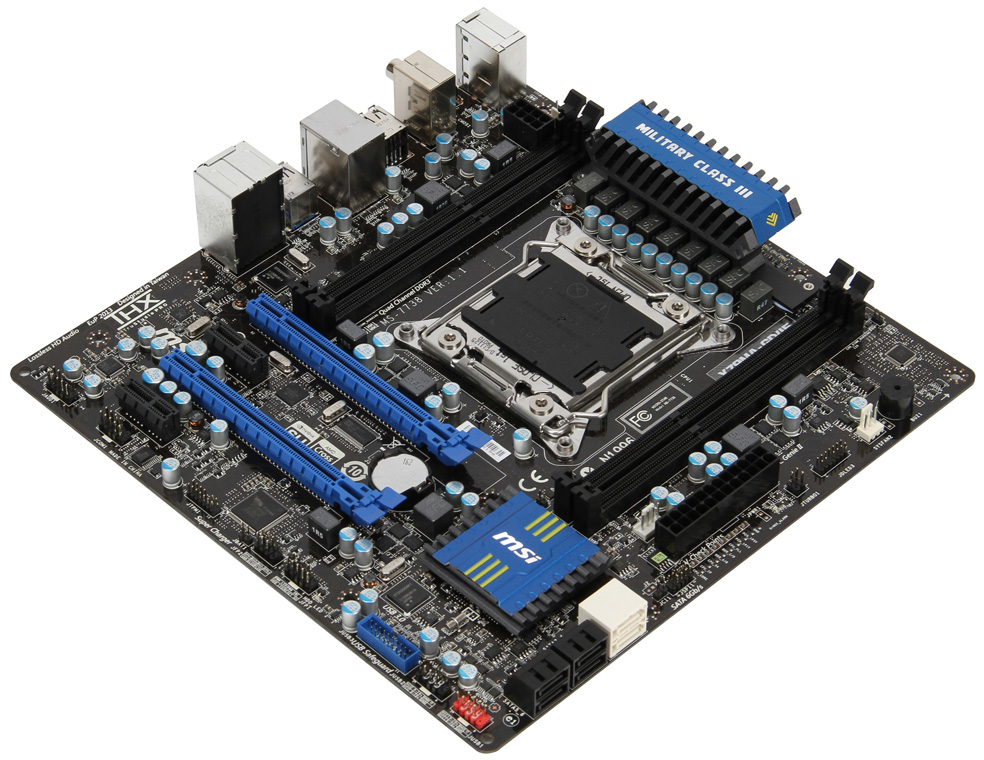
MSI Micro-ATX LGA2011 X79MA-GD45 Motherboard Pictured
Here are the first pictures of MSI's socket LGA2011 motherboard in the
micro-ATX form-factor. Earlier this week, we got to see through ASRock's
X79 Extreme4-M
that LGA2011 micro-ATX boards were indeed possible. Called the MSI
X79MA-GD45 (MS-7738 V1.1), this board offers all the connectivity
possible on a board with such a tight footprint. The LGA2011 socket is
powered by a 9-phase VRM. It is wired to four DDR3 DIMM slots, two on
either sides of the socket, powered by 2-phase VRM. Expansion slots
include two each of PCI-Express 3.0 x16 and PCI-Express 2.0 x1. 2-way
SLI and CrossFire are supported.
SATA connectivity includes two SATA 6 Gb/s (white), four SATA 3 Gb/s (black). There are no eSATA ports, but four USB 3.0, two on the rear panel, two by internal header, driven by Renesas-made controllers. The rest of the connectivity is fairly standard: 8+2 channel HD audio driven by Realtek ALC892 CODEC with optical and coaxial SPDIF outputs, single gigabit Ethernet driven by Realtek 8111E, and a number of USB 2.0 ports. One of the front-panel USB 2.0 headers is designed for charging portable devices even with the system shut down (yet plugged in). The board will be driven by UEFI firmware, we're getting to see some nifty features for overclockers such as voltage measurement points across a wide range of voltage domains.
Source
SATA connectivity includes two SATA 6 Gb/s (white), four SATA 3 Gb/s (black). There are no eSATA ports, but four USB 3.0, two on the rear panel, two by internal header, driven by Renesas-made controllers. The rest of the connectivity is fairly standard: 8+2 channel HD audio driven by Realtek ALC892 CODEC with optical and coaxial SPDIF outputs, single gigabit Ethernet driven by Realtek 8111E, and a number of USB 2.0 ports. One of the front-panel USB 2.0 headers is designed for charging portable devices even with the system shut down (yet plugged in). The board will be driven by UEFI firmware, we're getting to see some nifty features for overclockers such as voltage measurement points across a wide range of voltage domains.
Source
Subscribe to:
Posts (Atom)