Thursday, January 20, 2011

Antec Introduces Six Hundred V2 Gaming Chasis

In its 25th anniversary year, Antec, Inc., the global leader in high-performance computer components and accessories for the gaming, PC upgrade and Do-It-Yourself markets, today announced the Six Hundred V2, the latest addition to Antec's line of gaming cases. The Six Hundred V2 occupies the mid-range space, both in terms of price point and performance attributes, and is designed for gaming purists looking for simple gaming design.

The Six Hundred V2 is equipped with several new features, including a front-loaded 2.5" hot swap hard drive caddy (SSD compatible) which allows users to access and swap their drives quickly and easily from the front panel. The Six Hundred V2 also sports a CPU cutout for installation of after-market coolers, a cable management compartment for tidier routing and a windowed top panel for unique "moonroof" visibility.


The Six Hundred V2 is designed to handle the heavy cooling demands of gamers, professional users and system builders with its hard-hitting cooling system: a 200 mm overhead TriCool blue LED fan, one rear 120 mm TwoCool blue LED fan and a perforated front bezel to maximize airflow. Additionally, up to three optional 120 mm cooling fans can be added to cool hard drives and graphics cards.

Additional features include a bottom-mounted power supply to isolate heat and noise, seven expansion slots and 11 drive bays (six internal 3.5" HDD bays, three external 5.25" HDD bays, one internal bottom-mounted 2.5" SSD drive and the built-in hot swap 2.5" SATA HDD caddy) for flexibility, as well as three front USB 2.0 and Audio (AC'97 and HDA compatible) I/O ports.

"The Six Hundred V2 is a pure, simple gaming case at its finest," said Scott Richards, senior vice president of Antec. "With this case, we're broadening our line of gaming cases to address the space between the products for value-minded and high-performance gamers, respectively. As a mid-range case, the Six Hundred V2 is designed for consumers who appreciate lean, gaming-focused engineering, and still expect innovative performance features of Antec gaming cases."

Source

Wednesday, January 19, 2011

HIS Introduce Radeon HD 6850 IceQ X Series Graphic Card

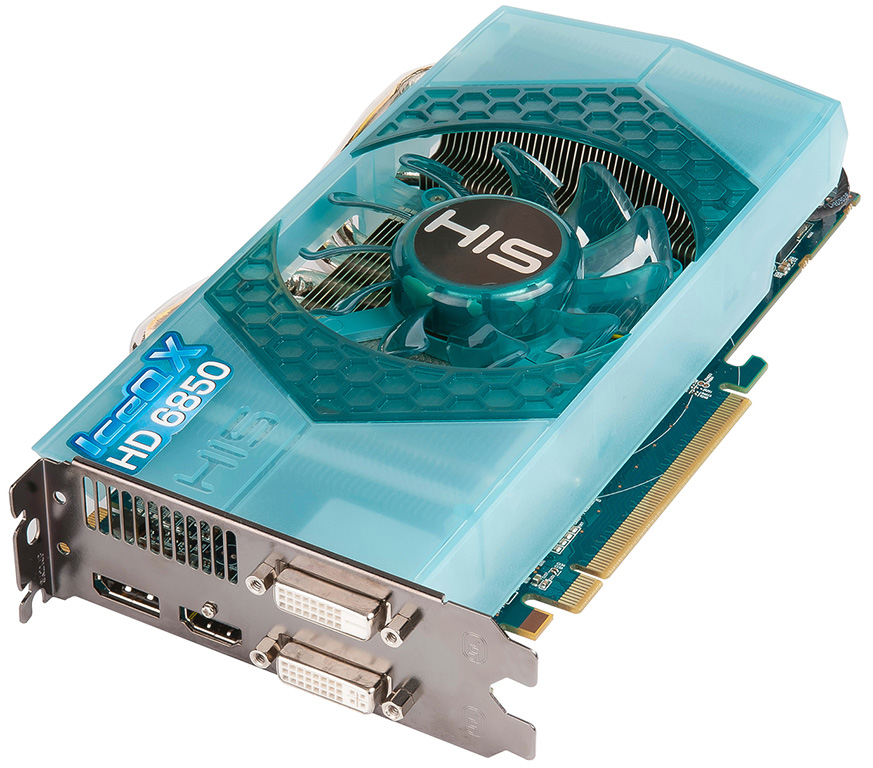
HIS started shipping two new models of graphics cards based on the AMD Radeon HD 6850 GPU, that use the company's in-house IceQ X design board and cooling solution. The two consist of a base model that sticks to AMD reference clock speeds, and a Turbo model that comes overclocked out of the box. The IceQ X cards use a standard length blue-colored PCB on which sits the IceQ X cooler. The cooler makes use of a slightly large aluminum fin array to which heat is conveyed by 8 mm thick nickel-plated copper heat pipes, which is centrally ventilated by a 92 mm fan. The cooler is covered by a frosty-looking shroud. The base model uses 775/1000 MHz (core/memory actual) clock speeds, and the Turbo model runs at 820/1100 MHz.

Lian Li's Lancool Brand Launching First Knight Series

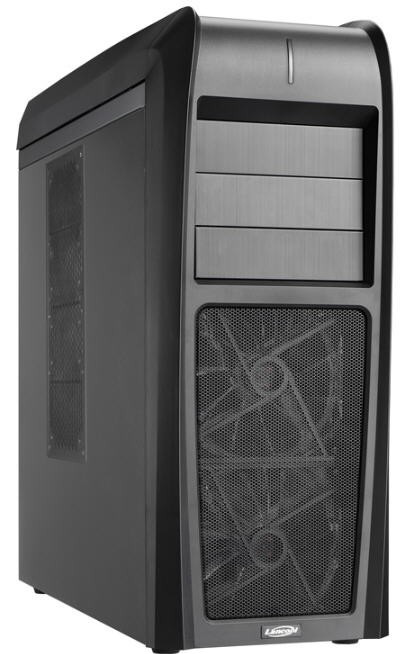
Lancool, maker of mid to high-end computer chassis for over twenty years, has launched three, new, mid-tower PC cases: the PC-K57, the PC-K59, and the PC-K63. Utilizing their affiliation with high-end chassis manufacturer Lian-Li, Lancool has designed all three of these PC cases with anti-vibration, tool-less installations of components, all-black SECC steel exteriors, and superior thermal performance capabilities, while providing exceptional aesthetic appeal.


PC-K63
The extremely sexy PC-K63's blacked-out interior is visible through a transparent side-panel window. Blue LEDs illuminate the PC-K63's two 140mm front panel fans as well as the 120mm rear panel fan. Two, top panel 140mm fans improve airflow inside the PC-K63 as well.

PC-K59 & PC-K63
Users can mount ATX, Micro-ATX, and Mini-ITX motherboards in Lancool's new PC-K59 and PC-K63. Six 3.5” and four 2.5” HDDs (internal) can be mounted without tools, as well as graphics cards up to 285mm long. Both chassis also accept three 5.25” ODDs (external), mounted on the front panel with no tools needed. Air-filters in front of two 140mm front panel fans ensure users' equipment is protected from heat and dust. Both chassis also include one 120mm exhaust fan located at the top of the rear panel.

PC-K57
Tool-less installation of three 5.25” ODDs (external), three 3.5” HDDs (internal), and two 2.5” HDDs (internal), as well as PCI slots allowing VGA cards up to 415mm long make this an excellent PC case for gamers and enthusiasts alike. ATX, Micro-ATX, and Mini-ITX motherboards are all compatible in the PC-K57. One 140mm intake fan on the front panel (with air-filter for dust-protection) and one 120mm exhaust fan, located at the top of the rear panel, keep modified components from over-heating. For users who prefer, the PC-K57 has an additional 140mm front panel fan mount (fan excluded). With a unique front panel design, reminiscent of medieval armor, Lancool's PC-K57 looks every bit as good on the outside as it does on the inside.

Specialty Side Panel
On the side panel of the PC-K59 and PC-K57 there is venting directly over the the CPU. Behind the venting, on the inside of the chassis, is a protective cover with four pop-off sections, allowing for one or two, 140mm or 120mm, fans to be mounted. If fans are not desired, the protective pop-off panel can be kept in place to keep dust from entering the chassis.

All three chassis include eight tool-less PCI expansion slots, a cable management clasp running from the top of the case to bottom for increased organization, an air-filtered vent directly below the PSU (tool-less mount at the base of the case) to aid airflow, two rubber-lined holes on the back panel enabling LCS, one USB 3.0 port, one USB 2.0 port, and HD Audio ports. An e-SATA port is also included on the PC-K59 and PC-K63. The dimensions of the PC-K59 and the PC-K63 stand at 215mm x 530mm x 530mm (W, H, D) while the dimensions of the PC-K57 are 210mm x 472mm x 505mm (W, H, D).

For more information, visit the Lancool First Knight Series product page.

Cooler Master Ships 120mm Turbine Master Case Fan

Cooler Master shipped its Turbine Master 120 mm series fans. As the name suggests, the fan has many blades (16 in number), shaped to look like an aircraft turbine. This design allows the fan to achieve high air flow at lower rotation speeds. The Turbine Master 120 is available in three variants based on rotation speed: Mach 0.8, that spins at 800 rpm, Mach 1.2 with 1200 rpm speed, and Mach 1.8 with 1800 rpm speed. Of these, only the 1200 rpm variant is out now, with the other two slated for a little later.

The Turbine Master 120 Mach 1.2 with its 1200 rpm rotational speed pushes 56.5 CFM of air with a rated noise output of 21.1 dBA. The fan uses a round frame with holes for 120 mm spacing, with both rubber and metal screws bundled. The motor uses a barometric ball bearing with a high lifespan. It uses standard 3-pin fan input, but a Molex to 3-pin cable is bundled. The impeller is detachable to help clean better. The Cooler Master Turbine Master 120 Mach 1.2 fan is priced at US $16.


Source

Tuesday, January 18, 2011

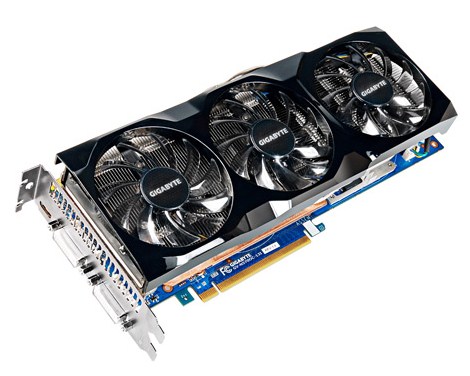
Gigabyte Nvidia GTX 560 Ti Graphic Card Pictured

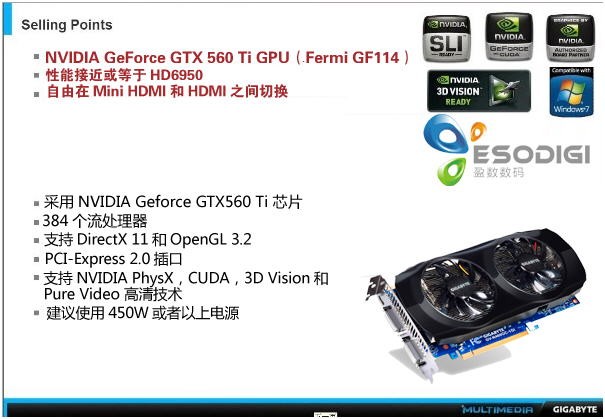
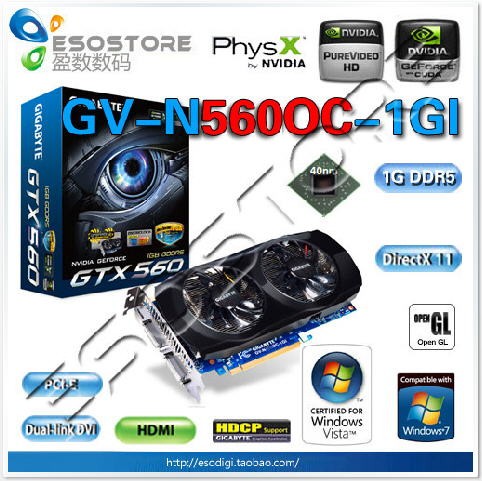
Here are the first pictures of a Gigabyte branded NVIDIA GeForce GTX 560 Ti graphics card. Carrying the model number GV-N560OC-1GI, Gigabyte's card is based on the 40 nanometer GF114 GPU, featuring 384 CUDA cores, and 1 GB of GDDR5 memory. The card itself doesn't look much different from some of Gigabyte's GTX 460 graphics cards. This can be attributed to the rumor that GF114 is pin-compatible with GF104, to minimize R&D costs partners have to incur. They would probably just have to use the new GPU and its appropriate BIOS.

Being an "OC" marked model, Gigabyte's card could feature factory-overclocked speeds. Taking this and the GPU itself into account, Gigabyte claims its GTX 560 Ti card to be competitive with Radeon HD 6950. The card uses Gigabyte's Ultra Durable VGA construction which combines a copper-rich PCB with high-quality components, and is cooled by the company's in-house design WindForce2X GPU cooler that uses a large aluminum fin heatsink using two fans.


Source

Monday, January 17, 2011

Gigabyte Released Nvidia GTX 570 Overclocked WindForce3X

Gigabyte released a new overclocked non-reference design GeForce GTX 570 graphics that makes use of its WindForce3X custom cooler. The GV-N570OC-13I from Gigabyte uses clock speeds of 780 MHz core and 1560 MHz CUDA cores, against reference speeds of 732 and 1464 MHz, respectively. The WindForce3X cooler keeps the beast cool. It makes use of a dense aluminum fin array to which heat is conveyed by a number of copper heat pipes, and ventilated by three 80 mm fans. The blue Ultra Durable VGA PCB by gigabyte makes use of top-quality components and 2 oz copper layer board. Other specifications are standard: 480 CUDA cores, and 1280 MB of memory across a 320-bit GDDR5 memory interface. Gigabyte did not give out pricing information.

Socket Pin Burnout Returns to Haunt LGA1155 ?

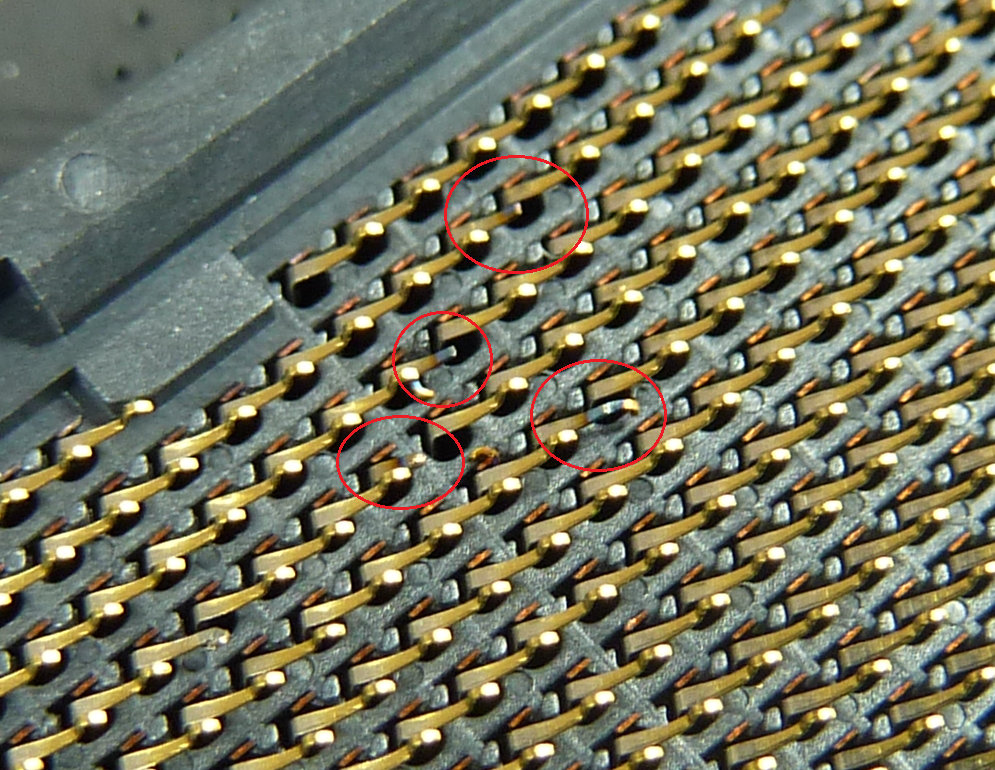
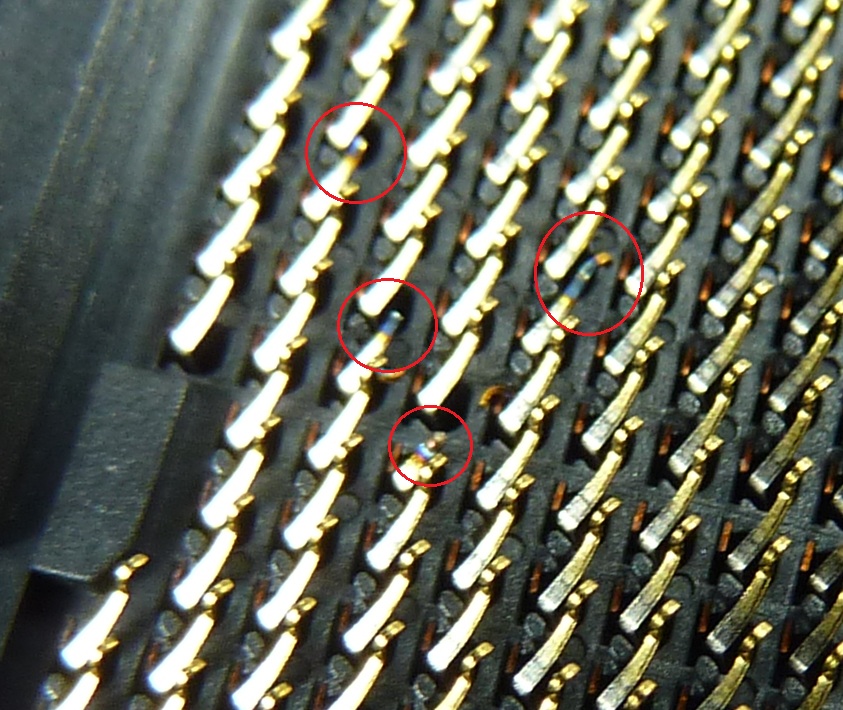
Last year, credible reports of a design defect with LGA1156 sockets made by a certain component manufacturer in particular, made headlines. Reviewers found that extreme overclocking using increase voltages, in test cases, caused certain pins of the socket to burn out, damaging both the board and processor. The defect was found to be caused by shorting between the pins and the socket causing tiny electrical arcs. Motherboard reviewer from TechReaction.net discovered that his Gigabyte GA-P67A-UD4 and GA-P67A-UD7 samples showed signs of socket burn. The publication is yet to receive a reply from the board manufacturer.

LGA1155 and LGA1156 are very similar in physical pin layout, chip package, and retention clips, although the pin-maps are significantly different. TechReaction comments that while only "extreme conditions" cause such pin burnouts, 24/7-stable overclocked settings could, over a period of time, create similar conditions. Only time, and extensive testing will reveal if burnouts are a cause for concern to enthusiasts.


Source

Thursday, January 13, 2011

AMD Bulldozer 50% Faster than Core i7 and Phenom II

Here, take some salt. AMD reportedly gave out performance figures in a presentation to its partners, performance figures seen by DonanimHaber. It is reported that an 8-core processor based on the "Bulldozer" high-performance CPU architecture is pitched by its makers to have 50% higher performance than existing processors such as the Core i7 950 (4 cores, 8 threads), and Phenom II X6 1100T (6 cores). Very little is known about the processor, including at what clock speed the processor was running at, much less what other components were driving the test machine.

Taking this information into account, the said Bulldozer based processor should synthetically even outperform Core i7 980X six-core, Intel's fastest desktop processor in the market. Built from ground-up, the Bulldozer architecture focuses on greater inter-core communication and reconfigured ALU/FPU to achieve higher instructions per clock cycle (IPC) compared to the previous generation K10.5, on which its current Phenom II series processors are based. The processor is backed by new 9-series core logic, and a new AM3+ socket. AMD is expected to unveil this platform a little later this year.

Source

Tuesday, January 11, 2011

Antec Updates Chasis at CES 2011

Antec, a company once known for their quiet, office-centric cases has really embraced the enthusiast market this past year, possibly more so than ever in their 25 year history. We had a chance to go through the company's line for 2011 at CES, which involves a few updates to existing lines as well as embarking on a whole new cooling quest.


Antec Sonata IV


While it was announced around Christmas 2010, CES was the first chance we've had to take a good look at the new Sonata IV, a chassis that has been the staple of the Antec line for many years. The case has always offered a simple, yet elegant design with a focus on low noise that works for just about any type of user, and the inclusion of a quality power supply really makes it the perfect combination for an everyday workstation. This is what made the Sonata an exceptionally well received case, and part of the attraction was a price tag that often put it below the cost of buying a good case and power supply separately.

Unfortunately, we can't help but feel that with the Sonata IV, Antec may have lost their way a bit with what the Sonata series is all about.

The Sonata IV keeps a nearly identical exterior design to the Sonata III with the piano black finish, covered external drive bays, and basic fronts ports, which now include a single USB 3.0 connector. In fact, aside from a few basic design and connector changes, the Sonata IV is an exact replica of the Sonata Elite, a case released in 2008.


An updated design to the internal drive bays which now sit vertically and perpendicular to the case necessitate a new protrusive air venting system for dual 120mm fans on the back side panel. This not only means more potential noise from hard drive cooling fans, but likely more sound leakage from components inside the case.

Antec has moved to a 620W Neo ECO Power Supply which is 80 Plus Standard certified and as far as the interior layout goes it is nearly a spitting image of the Antec Sonata Elite.


Antec has quoted an MSRP of $199 USD for the Sonata IV, which feels a little excessive given that the previous generation Sonata III and Elite can be regularly seen at under $100. Hopefully this changes as the chassis hits retailer shelves.


Antec One Hundred


Expanding on the Antec gaming series is the new One Hundred, a very simple chassis with a focus on compatibility and airflow.

It features 10 available drive bays, 3 x 5.25", 6 x 3.5", and a single 2.5" SSD at the bottom, expanded CPU backplate opening, 8 PCI expansion slots, 5 potential fan placements (ships with two) and a bottom mounted power supply location with plenty of cable management options.

The case is marked for an MSRP of $69.99 and unlike many competing cases in this price category, the One Hundred also has a fully black interior.